Inca City of Machu Picchu: ecstasy or disappointment?
THE IMPORTANCE OF EXPERIENCES
Ognuno di noi è frutto delle proprie esperienze e questo è ancora più vero se sei un viaggiatore o una viaggiatrice che gira il mondo per entrare in contatto con popolazioni, culture e tradizioni molto diverse da quelle in cui sei nato.
By travelling with open eyes, mind and heart, we can only learn and improve.
In this case, however, I speak of experiences because visiting a lot of places around the world, we have also several parameters of comparison.
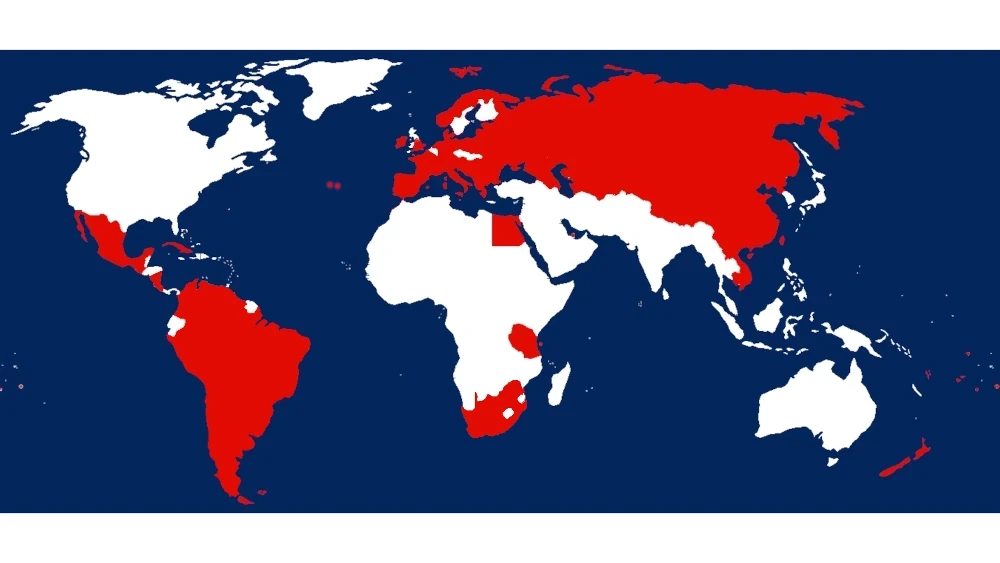
Visiting one place before another influences our perception of beauty and wonder.
Perhaps one should build up gradually, but that is not always possible.
We can’t say that one place is better than another without having seen it.
Another parameter of comparison (for me and many others, maybe not for everyone) is the amount you spend.
Some people with whom I spoke went to Machu Picchu on their honeymoon.
This is a decisive factor: is different if you have a fully paid trip or have to pay as little as possible and what you considered “the correct price”.
BEAUTIFUL BUT…
This anticipation was necessary to understand why for me is difficult to talk about Machu Picchu, the place that left me with the most deep sense of disappointment.
Maybe I should try to think objectively, imagining that I went to Machu Picchu without spending anything and without having seen other wonders of the world (official or subjectively considered as such).
But the web is already full of similar stories.
I only tell what I saw and the emotions I felt. Neither right nor wrong but real and sincere.
My past experiences weigh heavily on the considerations I am about to make.
Peru wasn’t my first trip, and because I’d already seen the Mayan cities (Palenque and Yaxchilan), the Aztec city of Teotihuacan and the Temples of Angkor, Machu Picchu didn’t impress me too much.
Beautiful but… I’ve been to… here instead…

Another thing that made me think negatively about Machu Picchu (and I’m not talking about the site itself, but the surrounding area) was the crazy amount of money you have to pay.
I often thought about whether I’d made a mistake, but I don’t think I could have saved much, and it would have been really tiring (I could have done it, but I also had to think about the fact that this was the last part of my month-long trip to Chile, Argentina, Bolivia and Peru, with a temperature difference of 70°C and an altitude difference of about 6,000 metres).
I’ll fill you in on the details in a sec, but I can already tell you that going to Machu Picchu costs about £450 on average.
Nice but… here I paid… there instead…
HISTORY
Machu Picchu, Machu Pikchu in the native Quechua language, “old mountain” is a 3,082-metre-high mountain on which the Incas built their city.
Over time, the name has also been associated with the archaeological site.
A World Heritage Site and one of the seven wonders of the modern world, it is famous worldwide for its spectacular location, nestled among the peaks of the Urubamba River valley.

The city, or perhaps only the summer residence of the emperor and the Inca nobility, should have been built around the year 1440 and inhabited until the Spanish conquest in 1532 by a permanent population of about 300 people, with a peak of 1,000 when the emperor went.
It was never really abandoned or forgotten, but some locals went and live there, making use of the agricultural terraces and complex water channels.
On 24 July 1911, the American historian Hiram Bingham reached the peak of the mountain and was pretty impressed by what he saw.

He quickly realised how important these ruins were in history, so he did some digging and put out a few publications around the world. He got some support from the Peruvian government, Yale University and National Geographic for this.
Machu Picchu has becomel Peru’s main tourist destination in just a few years.
HOW TO GET
Cusco
The first stop is to arrive in the city of Cusco.
There are at least two ways, depending on the departure and the time available.
Cusco airport is connected to the capital, Lima, with lots of daily flights, and they’re pretty cheap too.
This could be the best option if you’re arriving in Lima on an international flight (from Europe or, usually, from Mexico City, Santiago de Chile, Bogotà or Buenos Aires).
Otherwise you can get to Cusco by bus. I’d say this is a good option if you’re arriving from the south, maybe from Nasca o Arequipa) or if you’re coming from Bolivia (maybe after a one-day stop in Puno to check out the floating villages on Lake Titicaca).
The best quality/price solution should be the Cruz del Sur company.

I used it for some trips and the buses are very clean and immaculate.
The seats on the 1st floor (semi-cama), allow you to sleep peacefully even if the seats do not recline very far.
Thinking about the comfort of reclining the seat 170°, I chose the ticket for the upper floor.
But, like everything else, respect is always needed.
It’s nice stay almost like in a bed, but it means that the person behind will not be able to move because the front seat will rest on his/her knees.
I spent an entire 13-hour journey fighting with the “enemy” of the seat in front of me: he would slam the seat on my knees to tilt it to the maximum and I stopped him with punches and kicks in the backrest and headrest.
Imagine how relaxing this trip was…
From Cusco to Aguas Calientes
Once you arrive in Cusco, you need to find a way to get to Aguas Calientes, the small village that seems to have been created solely to exploit the tourists who go to Machu Picchu.
To make it simple, there are 4 solutions:
1. Gipsy mode: colectivos (shared vans, the classic means of transport throughout South America) depart from Cusco square for Hidroelectrica. The cost of this trip is about USD 10.
From Hidroelectica you walk for about 30 km until the village of Aguas Calientes.
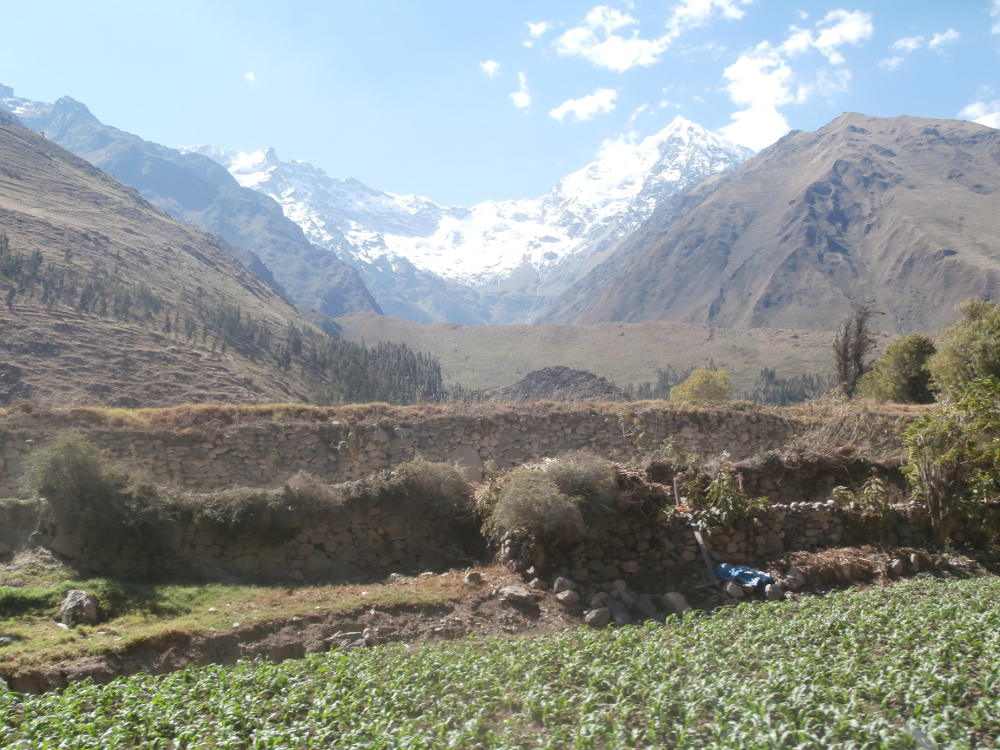
2. Perurail Train: the easiest option, and therefore obviously the most expensive, is the direct connection, travelling through the landscapes of the Sacred Valley of the Incas.
The trains have large panoramic windows, comfortable seats and offer a complimentary snack and drink.
A few months before departure, it seemed impossible to me that a return ticket would cost almost €180, so I decided to give up, convinced that I would find a better solution in Cusco.
Instead, the price there had risen to around 300 euros.

3. Middle way: I didn’t want to pay it USD 300 but I was also too tired to think of doing 60 km with my backpack, so I chose the classic “middle way”.
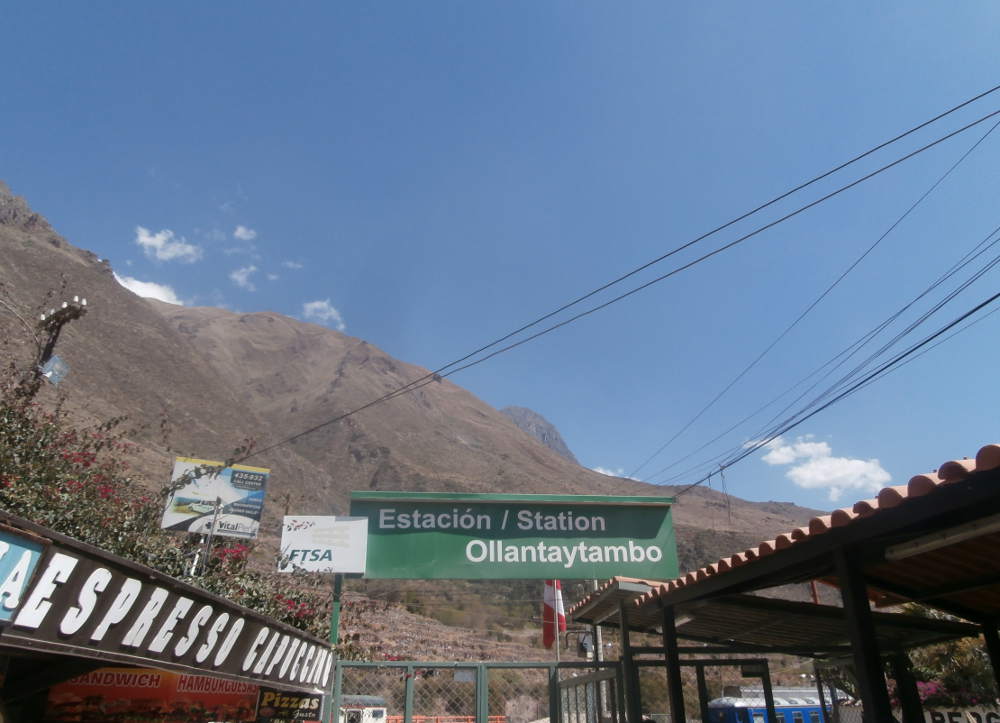
I took a colectivos from Cusco to the intermediate railway station of Ollantaytambo, and from there the Perurail train to Aguas Calientes. I booked a last minute ticket for about USD 110 one way.
4. Inca Trail: considered one of the most beautiful treks in the world, it usually takes 4 or 5 days.
Tickets are limited to 500 people, of which about 300 are local guides (required).
The old 43 km long mountain trail links the Inca archaeological sites of Runcuracay, Sayacmarca, Phuyupatamarca, Winay Wayna and Machu Picchu.
Prices range from USD 650 to USD 1,500 depending on the duration and comfort required.

SITE ENTRANCE TICKET
The Government of Peru often varies the conditions and times of access (it has tried to impose stricter time slots and shorter stay times)
I do try to keep this info up to date, but it’s best to check it when you need to.
The official website to buy tickets directly is www.machupicchu.gob.pe.
Choose with the most attention the date and time of entry because access is very fiscal and punctual.
Theoretically the stay at the site is not infinite but the times are limited in according to the ticket bought.
No one will look to throw you out, but if you are at fault (but do it anyway) avoid to attract the attention of the guardians for incorrect or forbidden behaviour acts.
For example, even if I consider them absurd and shameful, it’s forbidden to enter with backpacks or bags larger than 40x35x20 cm, bring food or drinks that have not been purchased on the site and have trekking sticks, umbrellas, camera tripods or smartphone holders.
There are 3 types of ticket:
– Machu Picchu: 2.300 places per day, entrance limited to the Inca city, cost about USD 60.
Places are limited to 800 accesses from 6am to 9am, 600 from 9am to 12, 360 from 12am to 1pm and 540 from 1pm to 2pm.
Theoretically you can stay in the site 4 hours from the moment of entry but there are not checks about it.
– Machu Picchu + Mountain: 400 places per day, including a visit to the Inca city and trekking on Machu Picchu Mountain, cost about USD 80 (discounts for children, students and citizens of Peru, Bolivia, Colombia and Ecuador).
There are 3 times available: 100 places to enter Machu Picchu from 06am and start trekking on the Mountain from 07am to 08am, 100 places to enter the Mountain at the same time but in the city only after the trekking, and the last 200 tickets to enter Machu Picchu from 08am and the Mountain from 09am to 10am
You could stay on the site for a maximum of 8 hours, while the return from the Mountain must take place before 1pm.
I chose to book this ticket as “the middle way”: entering only the archaeological site seemed reductive to me, the Inca Trail was instead excessive and this mountain is higher than Huayna Picchu and therefore more panoramic.
The climb to Machu Picchu Mountain was very hard and tiring.
I had read that it takes 2-4 hours to reach the top and go down.
I tell that after more than 2 hours of climb on the steep path, among irregular dirt tracks and narrow steps, in the middle of the jungle and with the fauna represented mainly by mosquitoes and gnats, I decided to stop and come down.
This is also because, beyond the physical and mental effort, climbing the mountain was very boring.
Man mano che si sale, il paesaggio è sempre lo stesso, solo che lo vedi da una maggiore altezza.
As you climb the landscape is always the same, only seen from a greater height. I would have climbed to the top to see a totally different landscape, but to see the same I’ve not found a good reason.
It is obviously a subjective thought but, while relaxing on the stairs, I talked with other “climbers”.
No one found the right spark to convince others, and above all themselves, to climb to the top.
We all started off excited but, who first and who later, we gave up, evaluating the excessive effort compared to the achievable result.

– Machu Picchu + Huayna Picchu: 400 places per day, including a visit to the Inca city and trekking on the Machu Picchu Mountain, cost about USD 80.
There are 3 times available: 100 places to enter Machu Picchu from 06am and start the trek from 07am to 08am, 100 places to enter the same time in Huayna Picchu but in the city only after the trek, and last 200 tickets to enter Machu Picchu from 08am and Huayna Picchu from 10am to 11am.
You could stay a total of 6 hours but the excursion to Huayna Picchu takes about 3 hours.
Huayna Picchu is the “young mountain”, 2693 meters high, famous for appearing behind the archaeological site in classic panoramic photos.
The ascent takes place on a narrow, steep, zigzag path, with sections where the stairs are directly carved into the rock.
This trek is not recommended for those who suffer from vertigo because its precipices and access is only allowed to +12 years.
You should reach the top in about 1 hour, but I haven’t climbed it so cannot confirm this information.

THE ARCHAEOLOGICAL SITE
Let’s take a closer look at the archaeological site of Machu Picchu.
The royal Inca city of Machu Picchu is located in the Andes Mountains, between the prominent peaks of Machu Picchu and Huayna Picchu, on a high mountain ridge with steep precipices as far as the Urubamba River and near the springs of the Amazon River
It’s also located in a highly seismic region, constantly affected by strong earthquakes and subject to heavy rainfall throughout the year.
Despite this, the city is still intact, demonstrating the high technical and scientific knowledge of the Inca civilization, which hadn’t written language and didn’t know the wheel or the iron.
The complex is divided into two large areas: the urban area and the agricultural area, separated by large squares.
The site is, however, largely to be deciphered, the names and functions of the structures are hypothetical and still under investigation.

The urban area
Houses were built here and civil and religious activities were also done.
The Temple of the Sun is one of the best examples of organic Inca architecture and the only circular building in Machu Picchu.
In the lower part there are symbols and steps, inside a sculpture and niches used for ceremonial purposes related to the cult of the dead.
In the upper part, a large sculpted rock served as an altar while the windows were used for observing astronomical events.
For a Sardinian it’s immediate to associate it, both in shape and use, with a nuraghe.
Under the Temple of the Sun, almost hidden, there is a natural stone cave known as the royal tomb.
Some scientists suppose that it was the mausoleum of the Inca emperor Pachacutec.

The capanna del custode is one of the few renovated buildings.
Its high thatched roof is the most accepted hypothesis of how the original roofs of the houses were.

The agricultural area
The secret of its longevity is the drainage system.
The urban area has 129 canals that prevent landslides and erosion, canalising all the water to the agricultural area of the city and to the spring area, providing a perennial spring of water.
Here the foundations of the agricultural terraces have been built with stone retaining walls, a thick layer of surface soil and, deep down, larger stones, gravel and chiselled stone shavings.

This perfect engineering work ensured the necessary drainage to prevent rainwater stagnation and erosion of the hills.
There was no irrigation system on the terraces because the Incas considered rain to be sufficient for this purpose.

EXPENSES SUMMARY
In this computation I prefer to omit the costs, too variable and subjective, to arrive from any place in the world to the city of Cusco.
So I focus on how to reach Machu Picchu from Cusco.
Cusco: the city certainly deserves a few days dedicated but, beyond that, it’s better to sleep here after visiting the archaeological site
You could still stay in Aguas Calientes but, as said, there the costs are much higher while in Cusco you can find a bed for USD 5.
Train: the price varies depending on the travel period, the booking date (I booked the last day in Cusco because I didn’t think that the prices seen online were real) and the departure station.
In general you have to pay about USD 150 from Cusco to Aguas Calientes and USD 100 from the intermediate station of Ollantaytambo to Aguas Calientes.
So USD 300 or USD 200 round trip.
Colectivos: the alternative to the train is to use the colectivos (vans with which you share the trip with other people) to reach the town of Hidroelectrica in about 7 hours and from there continue on foot along the railway tracks for almost 15 kilometres until you reach Aguas Calientes.
The colectivos can also be used for the Cusco – Ollantaytambo route.
In both cases the amount is around USD 5 or 10.
Aguas Calientes: you must sleep here at least one night and it’s difficult to find accommodation for less than USD 20.
Everything (souvenirs, drinks or simple empanadas) is at least three times more expensive than what you would pay in Cusco. So get organized in advance so as not to leave crazy amounts at the market or in a restaurant.

Bus: access to the site at 06am implies a wake-up call well before the sunrise, in order to be at the bus stop at least at 03.30am An excessive delay means having to queue for kilometres which, just seeing it, could make you burst into a desperate neurotic cry.
Buses leave from Aguas Calientes from 05.30am to 3.30pm and come back until 5.45pm.
The cost of the ticket is about USD 20 round trip.
The alternative is of course a 10 km walk. I have heard that it takes at least 2 hours, also considering that the climb is long and the buses have no regard to run raising dirt and dust.

Access ticket: as I explained before (and waiting for updates) the price ranges from about USD 60 to USD 80.
Guide: when I went, the guide was optional. Now it would seem obligatory at a cost of USD 75.
However, it seems that you can still access the site without paying this additional fee.
To recapitulate, we can therefore consider 4 price ranges:
1. Gipsy experience : USD 100 ( + about 80 km on foot)
colectivos Cusco – Hidroelectrica + 30 km walk to Aguas Calientes + walk up to Machu Picchu + entrance to the site + return in the same way.
2. Expensive comfort: USD 450
night in Cusco + colectivos Cusco – Ollantaytambo + train Ollantaytambo – Aguas Calientes + night in Aguas Calientes + bus to Machu Picchu + entrance to the site + return in the same way + various expenses.
3. Inca Trail: from USD 650 to USD 1.500
according to the durability and comfort required.
4. Business class: ∞
as someone said, “to infinity and beyond”.
FINAL CONCLUSIONS
Is it worth going to Machu Picchu?
Yes, of course! Despite all the negative notes I mentioned, it’s a place to see.
Machu Picchu is still a historic place, one of those destinations that represents a point of arrival.
What makes it unique is the place itself, a city built on top of a mountain, surrounded by the Peruvian Andes mountain.
Its beauty can be elevated by the mystical and mysterious atmosphere that creates clouds, fog and sun.
It’s probably a destination more for tourists than for travellers, but it’s a place where each of us, once in our lives, should go.





Leave a Reply
Want to join the discussion?Feel free to contribute!