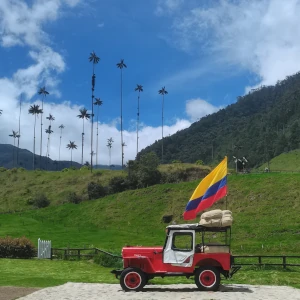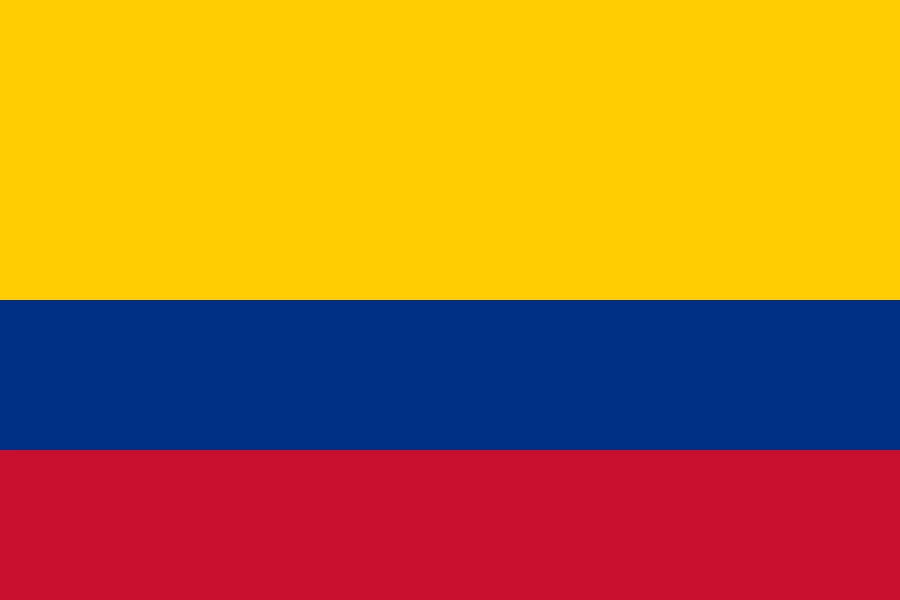
Colombia
Plata o Plomo
a la orden
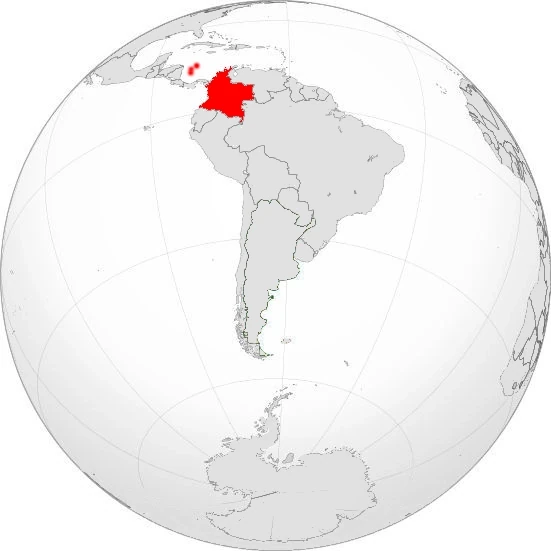

Plata o Plomo
a la orden
For many people, Colombia is synonymous with narcos, and all that that implies.
However, another big history is also directly associated with Colombia: the communist guerrillas of the FARC (Revolutionary Armed Forces of Colombia – People’s Army) and the ELN (National Liberation Army).
The war involving narcos, the FARC, the ELN, the military, paramilitaries, the Colombian state and the United States has obviously obscured what Colombia has to offer in terms of nature, deterring tourists from this area of South America.
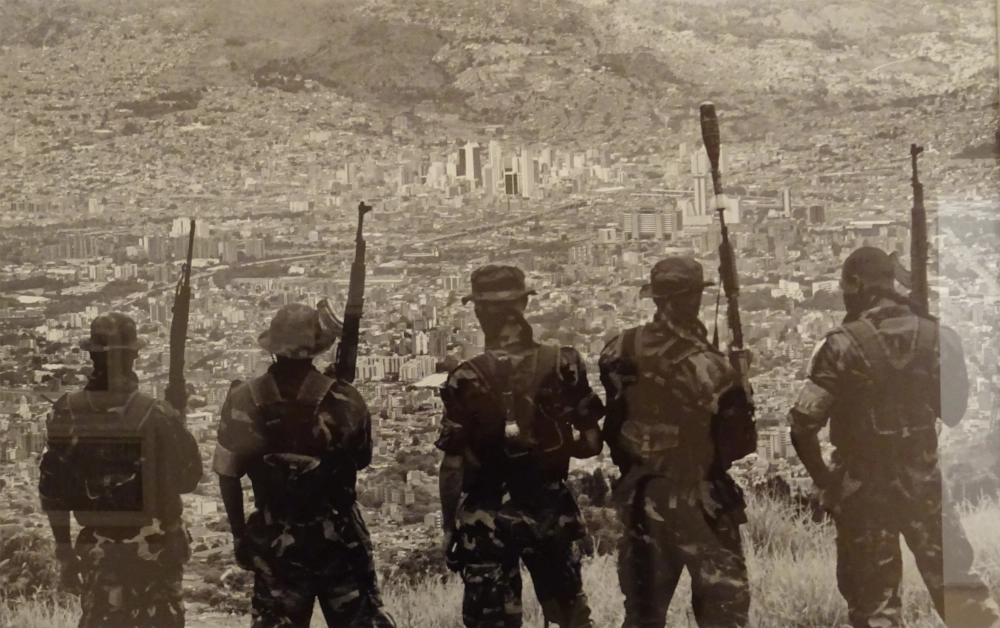
Army and Paramilitaries in Bogotá

Protests in Latin America
As a traveller who wants to see the world with my own eyes, I had no choice but to visit Colombia.
In 2023, the idea of travelling to Colombia seemed almost impossible, and it was difficult to find information in advance about where to go and what to see.
Ignoring Lonely Planet and official websites that ranked Colombia one of the most dangerous countries, even blog articles dedicated to this destination were few and hard to find.
I like to feel like a pioneer on certain trips and discover everything for myself, so that was perfect for me.
In addition to my trip to Colombia in 2023, in 2024 I came back more or less by chance.
My flight from Madrid to San José in Costa Rica, from where I then continued on to Nicaragua, had a stopover of a few hours at Bogotá airport.
However, on my way back, I had a 13-hour delay with Avianca and, because I also missed a crazy connection with an Bogota-Medellin-Madrid flight, the Colombian national airline paid for my dinner and stay at the Hilton Hotel in Bogota.
Needless to say, the hotel was amazing and dinner was sumptuous.
In short, Colombia is calling me back…

European passport holders don’t require a visa to enter Colombia.
However, your passport must be valid for at least six months.
Depending on the areas you plan to visit, and those you have visited in recent weeks or months, you may need to be vaccinated against yellow fever.
The geopolitical situation in Latin America can change more rapidly and violently than in the rest of the world.
This is why crossing certain borders is not always easy or feasible.
Currently, for instance, it’s almost impossible to travel by land between Colombia and Venezuela.

flight route Madrid – Bogotá
As with most destinations in Latin America, the most convenient direct flights between Colombia and Europe connect Bogotá and Medellín with Madrid and Barcelona.
Of course, there are also many daily connections with other countries in the Americas.
Cartagena Airport also offers good connections to Amsterdam with KLM.
Pereira Airport is the main gateway to the Eje Cafetero region.
The bus station can be reached for around 15,000 pesos.
A colectivo to Salento should cost around 10,000 pesos.
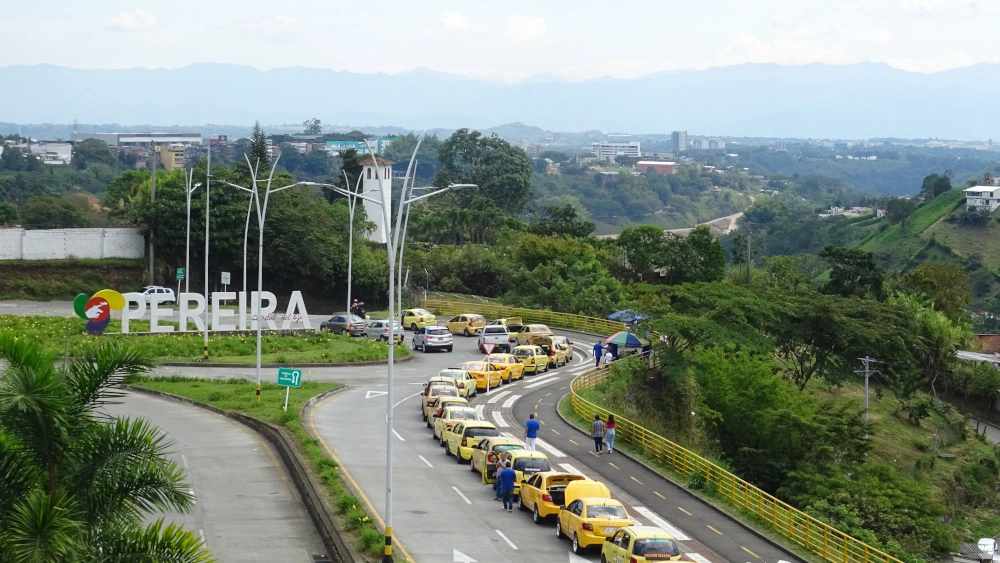
Pereira Airport
If you have plenty of time, you can easily travel by bus from the southern point of Patagonia o the northern border of Mexico.
This means that you can enter Colombia by bus with international connections.
In this case, the neighbouring countries are Panama, Ecuador, Perù and Brazil.
As for internal travel in Colombia, it should be noted that the roads are very winding and uneven.
Therefore, the average speed will be very low, and the bus may also stop for up to an hour en route to allow drivers and passengers to eat, drink, use the toilet and stretch their legs.
In short, you know when you leave (not much), but not when you will arrive.
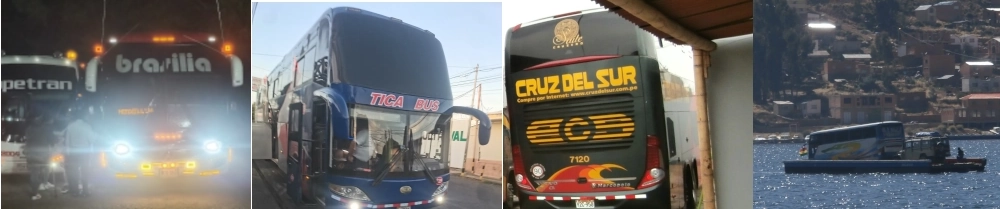
Buses in Latin America
Colombia is bordered by the Pacific Ocean and the Caribbean Sea and can also be reached by sea.
Cartagena is an important tourist port and some of its islands are also popular destinations for foreigners from all over the world.
Organising my trip to Colombia by myself was a bit complicated.
Beyond the classic but useless advice that ‘Colombia is dangerous; you’d better not go unless you’re a drug trafficker’, few travellers have ventured here.
Tourist guides and travel diaries, especially for certain areas, are almost non-existent.
I therefore hope that my experiences will be useful for your next trip in Colombia.
I travelled far and wide and honestly thought it would be much more dangerous.
However, Colombia is not a destination for everyone, and it should not be underestimated.
I consider almost every place in the world to be potentially dangerous, so you will never hear me advise against visiting a country simply because it’s dangerous.
You’ve got to be careful everywhere and in every situation, know and respect local laws, traditions, customs and culture.
Personally, I found myself in the most dangerous situations in Berlin and Johannesburg.
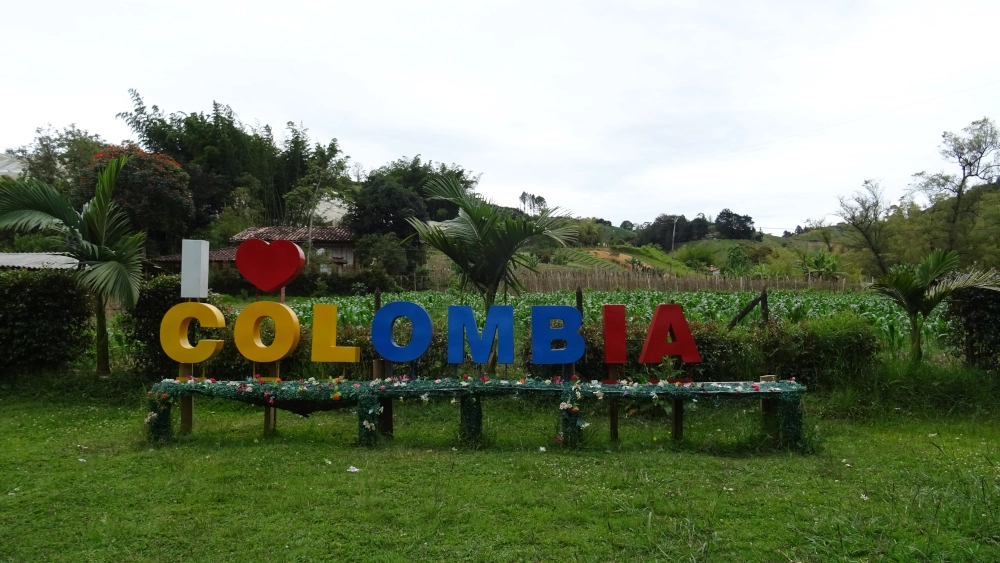
I don’t consider I have been to a country unless I have visited its capital city.
Bogotá is also one of the country’s main gateways, with El Dorado airport evoking stories and ancient legends.
The city centre is quite peaceful and pleasant to walk around.
However, this changes at around 5 p.m., when the sun sets and the city shuts down in darkness.
The street lights often don’t come on, the shops close and people shut themselves in their homes.
In a city where the four seasons occur several times a day, the rain makes everything even gloomier.
But what’s the reason for walking the streets of Bogotá in the dark?
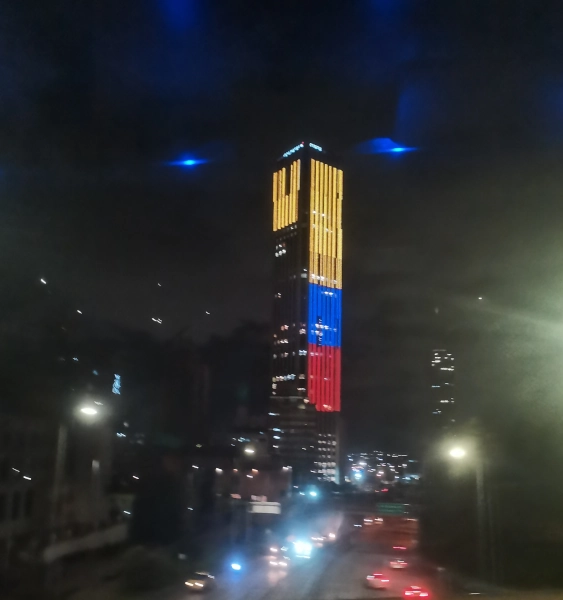
Bogotá by night
However, there are many attractions in the Colombian capital in the morning.
Like every city in Latin America, Bogotá’s main square is Plaza Simon Bolivar.
Here you will find buildings that symbolise power, such as the Capitolio Nacional (the seat of Congress), the Catedral Primada de Colombia, the Palace of Justice and the Palacio Liévano (the seat of the Bogotá City Council).
The different architectural styles also reflect the historical periods in which the buildings were constructed.

Palacio Liévano, Bogotà

Primatial Cathedral of Colombia, Bogotá

Congress of the Republic – Plaza Bolívar, Bogotà
As a history buff, I had to visit the Gold Museum to see the largest collection of gold artefacts in the world, which trace the history of the continent from its earliest inhabitants.
The visit takes 2–3 hours.
The square in front of the Gold Museum is quiet, and several city tours depart from here.
In this regard, I recommend those offered by Beyond Colombia.

Pre-Columbian mask – Gold Museum of Bogotá

Pre-Columbian jewellery – Gold Museum of Bogotá
Not far from the Gold Museum is the Fernando Botero Museum.
As well as paintings and sculptures by the master who was born in Medellín, there are also works by Salvador Dalí, Pablo Picasso, Joan Miró, Edgar Degas and other international artists.
The museum also has a section dedicated to photographs that tell the story of Colombia over the last few decades.

Monalisa – Fernando Botero Museum, Bogotá

La primera dama – Fernando Botero Museum, Bogotá

Portrait of Cezanne – Fernando Botero Museum, Bogotá

Guerrilla by Eliseo Velásquez – Fernando Botero Museum, Bogotá
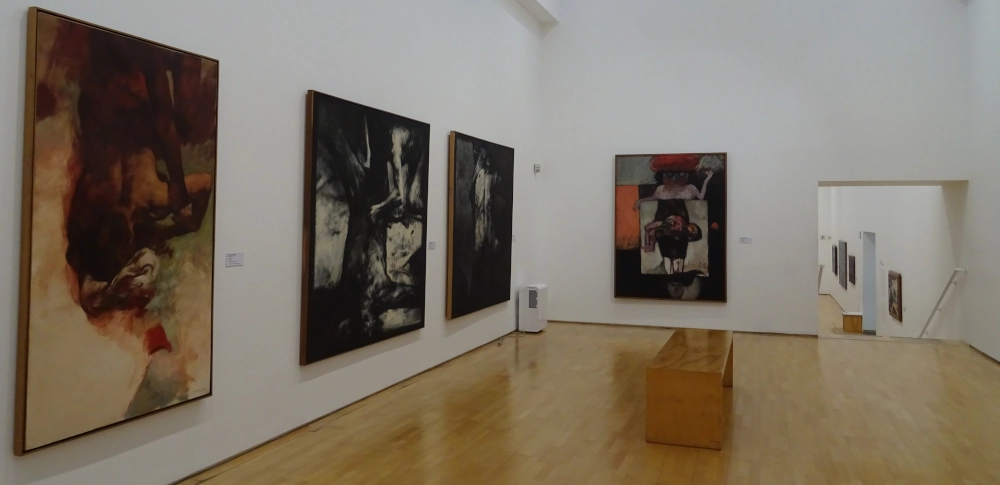
Fernando Botero Museum, Bogotá

Physichromie by Venezuelan artist Carlos Cruz-Diez – Fernando Botero Museum, Bogotá
I would like to make a special mention of Barrio Egipto.
Born out of the bright prospects of Comuna 13 – or rather, out of the darkness of shared experiences in Medellín prison – one of Bogotá’s most dangerous neighbourhoods is trying to shake off internal wars over drug trafficking.

We are all Barrio Egipto
It’s certainly not an easy path, but the desire of Jaime Roncancio ‘Calabrazo’ to create a better life for his family and all the inhabitants of the neighbourhood must be realised.
He was the inspiration behind the “Breaking Border” project, but was murdered in his neighbourhood on 8 October 2024. His family and friends need all the support they can get to make his dream come true.
While Comuna 13 in Medellin is already a popular tourist destination, Barrio Egipto is an even more iconic place to visit.
The Barrio Egipto tour with Breaking Border is one of Bogotá’s unmissable experiences.

Church of Our Lady of Egypt – Bogota

Landscape of Bogotá from Barrio Egipto
The Cacique Lagoon Reserve is an ancestral place where silence stirs the conscience and makes you dream.
The lake, which is in the Cordillera Andes mountains, looks like a crater caused by a meteorite, and is roughly 1.5 kilometres across.
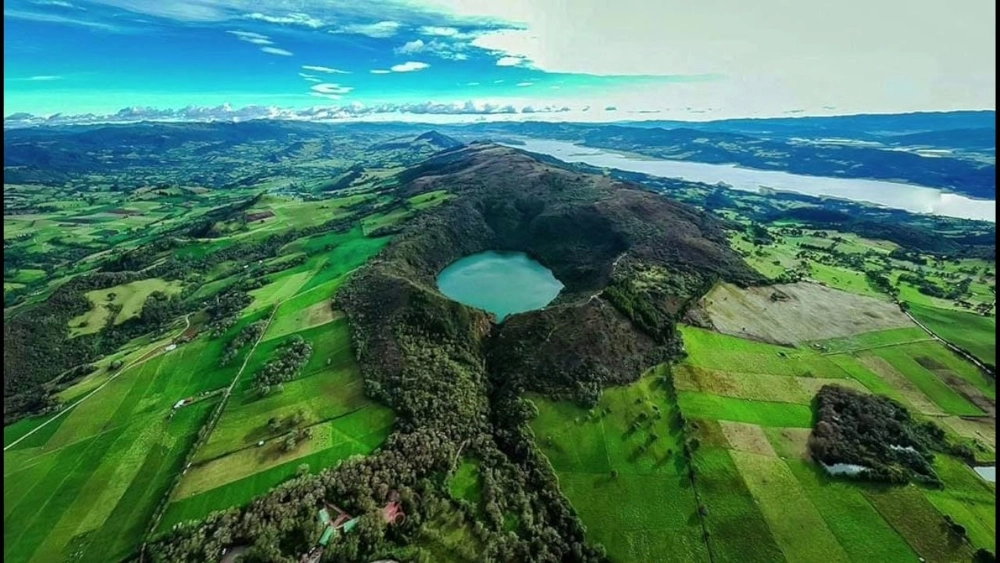
Laguna del Cacique from a drone
It’s a sacred place for the pre-Columbian Muisca people, who performed a ritual here that later became the basis for the famous legend of El Dorado.
The Zipa of Guatavita was the leader of the Muisca people, and he covered himself in resin and gold dust. He sailed to the middle of the lake on a raft and then dived into the lagoon.
At the end of the religious ritual dedicated to the worship of the Sun, the faithful threw gold, silver and other precious objects into the lake.
There are legends about this place that tell of vast quantities of gold and precious stones hidden in the depths of the lake.

Muisca Raft – Gold Museum of Bogotá
Over time, the stories about El Dorado have changed. It started out as a man, but then became a city or an empire where people lived happily and didn’t need material things.
From the time of the European conquistadors to now, the myth of El Dorado has always fascinated and inspired people.
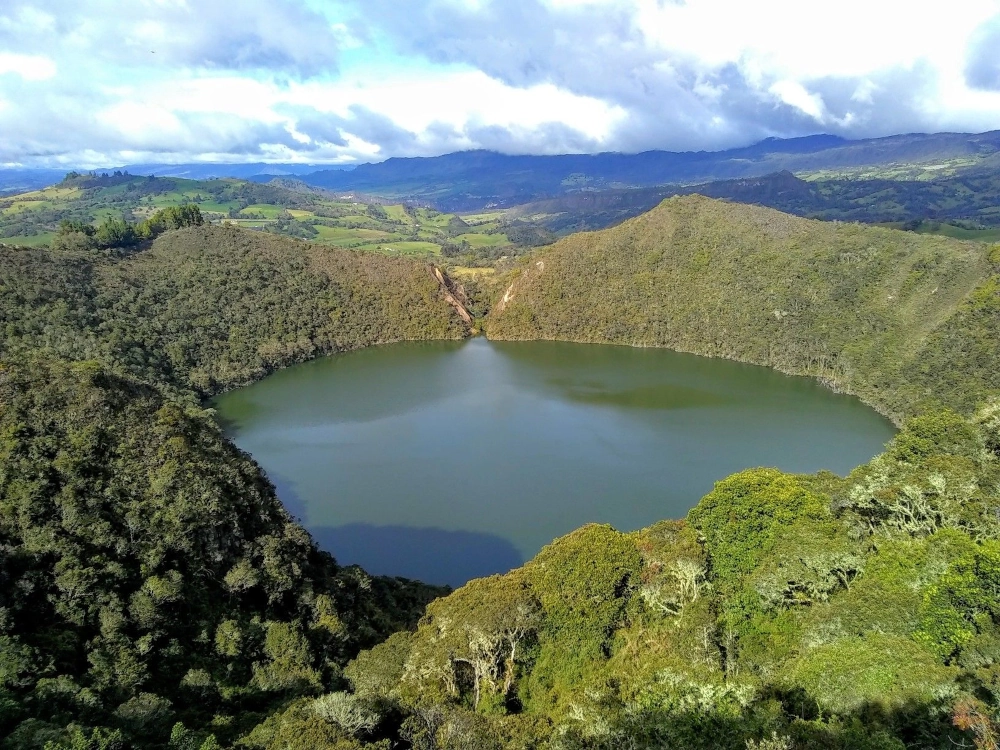
Cacique Lagoon
The Salt Cathedral, dedicated to Our Lady of the Rosary, is located inside the salt mines of Zipaquirá and is one of the most important Catholic shrines in Colombia.

INRI inscription in the salt mines of Zipaquirá
Illuminated crosses and sculptures, including the Stations of the Cross, create a mystical atmosphere that makes walking through the salt tunnels a magical experience.
You will be left breathless when you arrive at the caves and cathedral.
Having never seen such a structure before (a similar experience can also be had in Wieliczka, 15 km from Krakow), I was constantly filled with amazement and excitement during my time in the salt mines, dozens of metres underground.

Red cross in the Salt Cathedral of Zipaquirá

Caves in the Salt Cathedral of Zipaquirá

Salt Cathedral of Zipaquirá
Zipaquirá is located in the Sabana de Bogotá, about 50 km from the capital.
It can be reached by bus or by joining one of the daily tours that depart from the city centre.
In 2007, Colombians voted the Catedral de Sal as their country’s number one wonder.
Let’s cut to the chase: when you think about Colombia, you probably think of Medellín and Pablo Escobar’s Cartel.
However, you’d be disappointed if you thought the city was still dangerous, with drug lords roaming around in huge 4x4s with their guns on display and hunting down rival cartels.
I arrived from Bogotá by bus on a normal Wednesday night, and Medellín welcomed me at 3 a.m. as if it were a special Saturday night.
The streets were teeming with people, all the bars were open and the city was lit up as if it were daytime.

I arrived in Medellin by bus from Bogota.
The next morning, I explored the city centre on foot and by metro.
The artist Fernando Botero was born here, and his works adorn the streets and squares of his beloved city.

Rafael Uribe Uribe Cultural Centre, Botero Square in Medellín

Roman Soldier, sculpture by artist Fernando Botero in Plaza Botero in Medellín
Medellín is a lively city, with a strong pulse beating in the heart of its city centre, where you can stroll in the shade of palm trees and skyscrapers.
Parks and tree-lined avenues embellish the city of eternal spring.
Green is the predominant colour here, favoured by a climate that hovers around 25 degrees all year round.
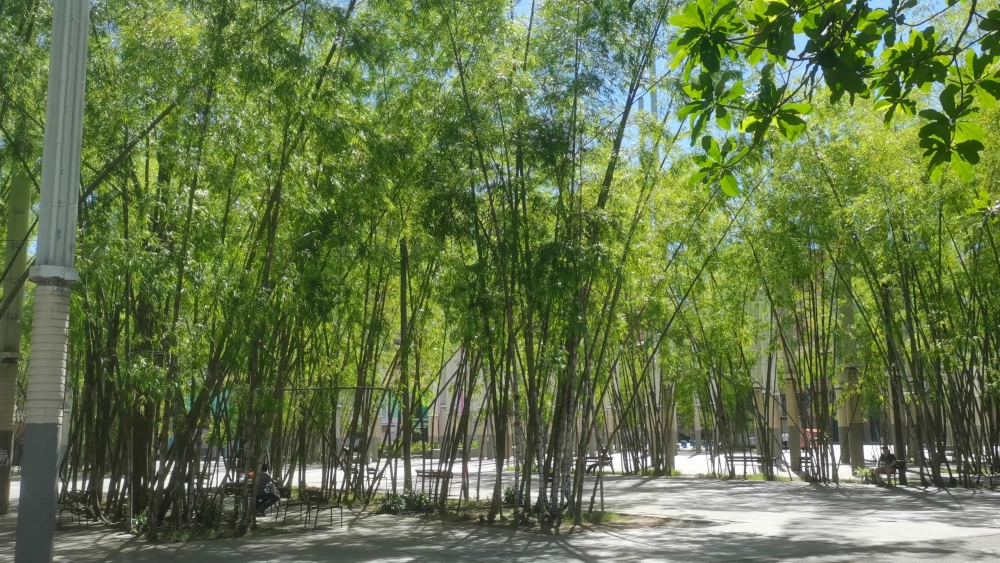
Plaza Mayor, Medellin

Avenida de la Libertad, Medellin
The extensive public transport network makes it easy to get around the city, with connections by metro, tram, electric bus and cable car.
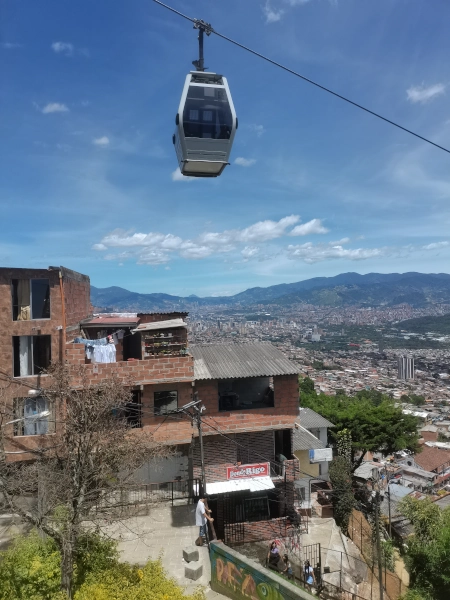
Metrocable over the houses of Medellin
One of the most popular tourist attractions in Medellín is the Comuna 13.
What was once one of the city’s most dangerous areas now welcomes tourists without any risk whatsoever.
Tours depart from outside the San Javier metro station, on Carrera 99. All of them cost the same, last the same amount of time, and follow the same itinerary.
You can choose the guide who inspires you the most, or walk to Comuna 13 or take the public bus on Calle 47A.
While I understand how important it was for the residents to transform the neighbourhood and how much the tourist trade is needed to replace lost income, the identical playgrounds left me speechless.
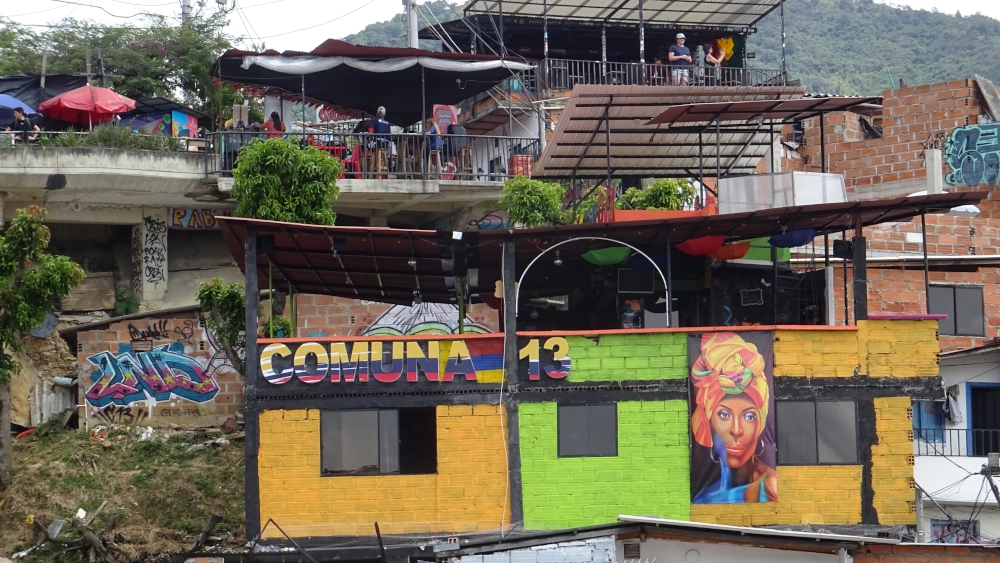
Comuna 13 Medellin sign
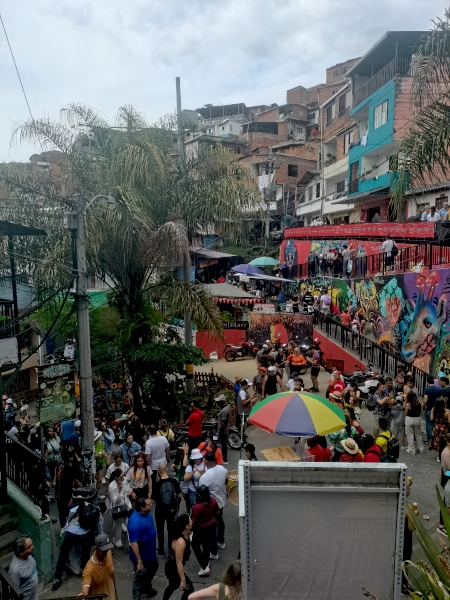
Walking through Comuna 13 in Medellín
While wandering aimlessly through the streets, I came across the Comuna 13 Museum, which is perhaps the most authentic place.
Here, photos depict the neighbourhood’s true history, characterised by suffering, death, drugs, Operacion Orion and FARC guerrillas.
Today, Comuna 13 can be seen as a symbol of the rebirth of a city that is still strongly associated with Pablo Escobar’s cartel, but where it is fairly safe to walk around.
Of course, you should always bear in mind that we are in Medellín, Colombia.
It makes no sense to walk around alone at night in neighbourhoods where not a single stranger sets foot.
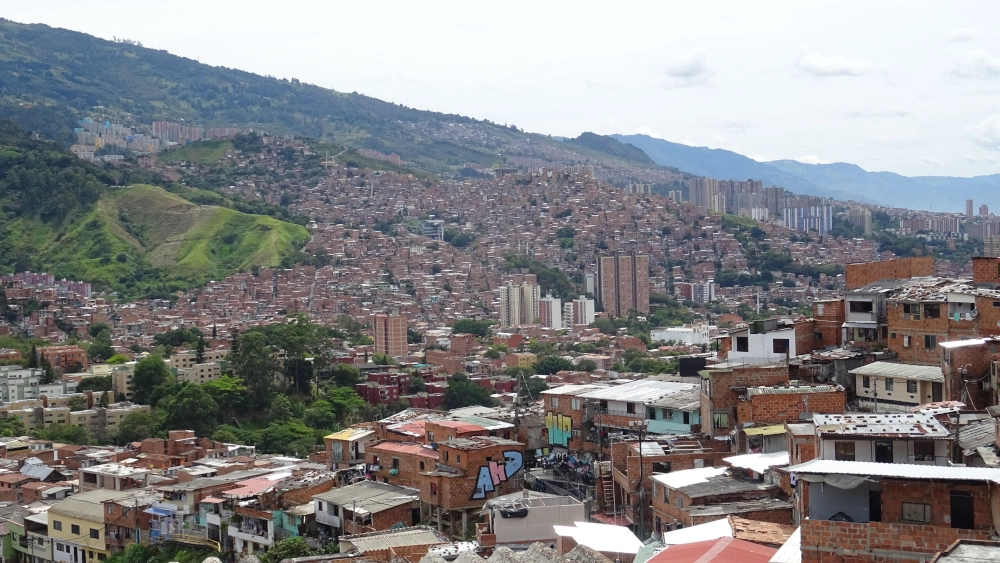
Comuna 13 Medellín
The Medellín area’s natural symbol is Piedra del Peñón.
This massive rock formation, which is about 220 metres high, was formed 65 million years ago by a volcanic explosion and is estimated to weigh around 66 million tonnes.
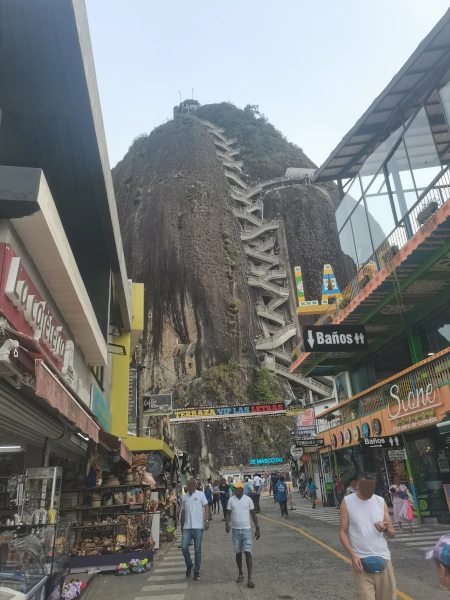
Piedra del Peñón, Guatapé
Luis Eduardo Villegas López was the first to climb it on July 16, 1954. He used a bamboo ladder that was built in seven days.
Climbing the 659 steps (numbered every 10) can be tiring, but the view from the top makes it worthwhile.
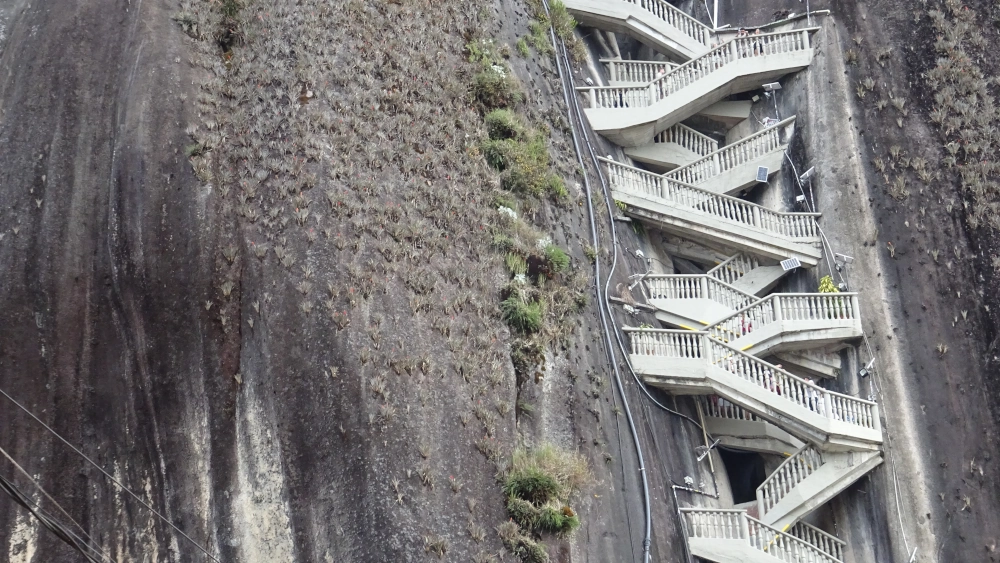
Zoom in on the steps of Piedra del Peñón, Guatapé
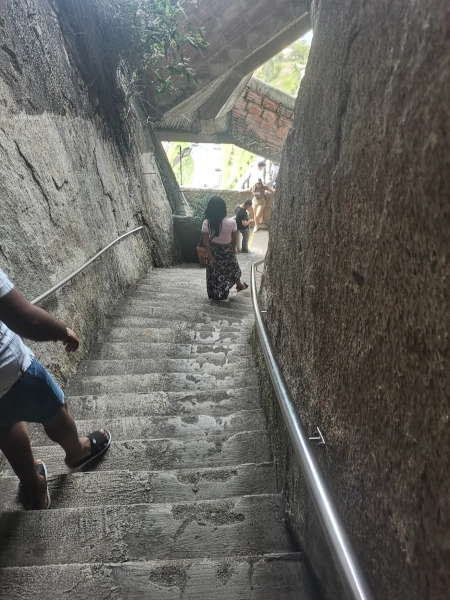
Piedra del Peñón Steps, Guatapé
You can get there independently in about 2 hours by bus from Medellín’s Terminal del Norte, and it’s often included in tours that go to Guatapé.

Panoramic view from Piedra del Peñón, Guatapé

Helicopter flying over Guatapé, view from Piedra del Peñón
This town near Piedra del Peñón is the perfect place to stop for lunch and rest after the climb.
Guatapé’s colonial buildings, which were built in 1814, are easy to spot because they have a central square, church and fountain.
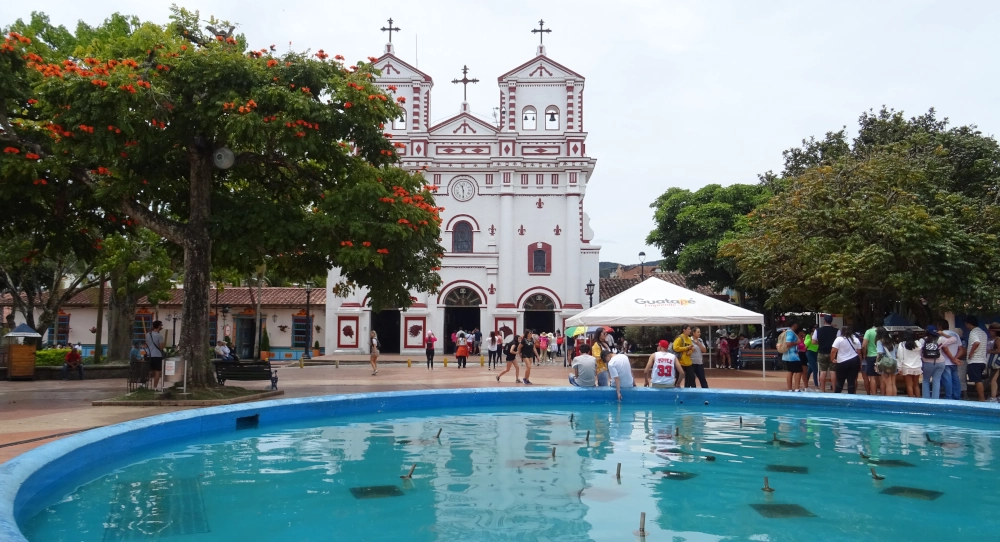
Church of Our Lady of Carmen in Guatapé
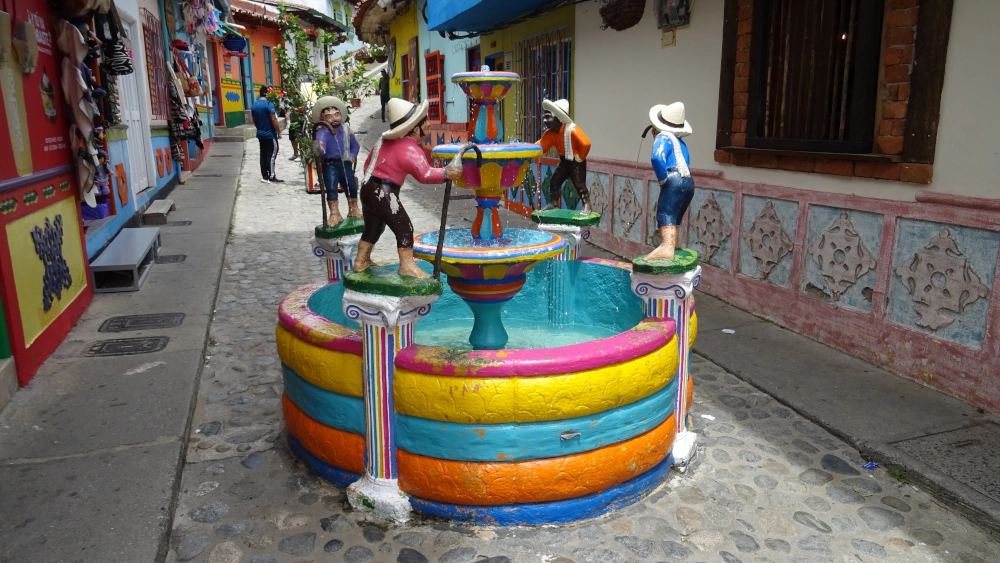
Los Zócalos Square in Guatapé
The murals on the houses’ fronts describe the family living there by showing their nicknames or jobs.
“El Zòcalo“, is the part of the house dedicated to the mural, which can be the wall, a column, a window, a frame, a base, and so on. It’s an expression of identity, a part of history, a feeling, a memory or a dream.
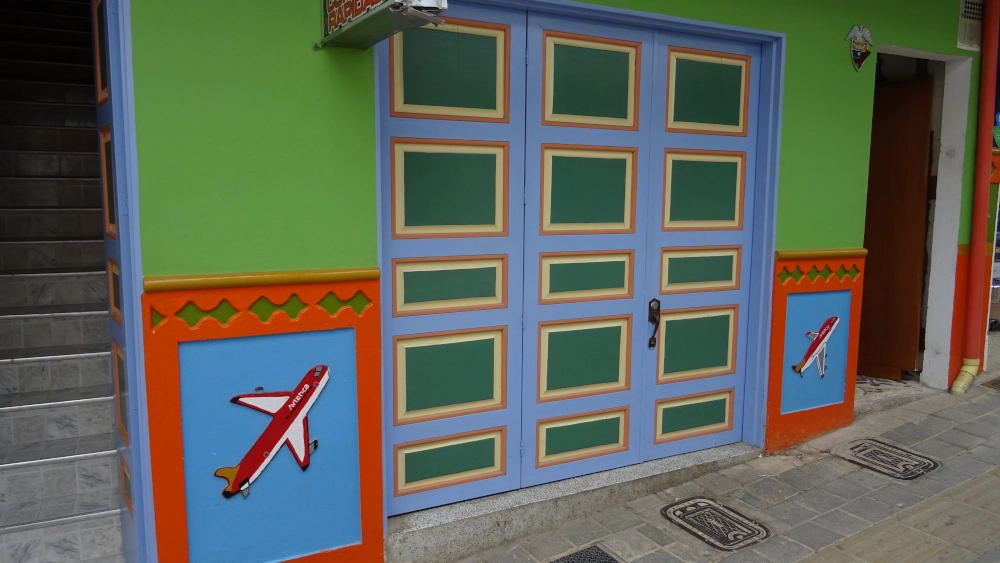
Travel agency in Guatapé
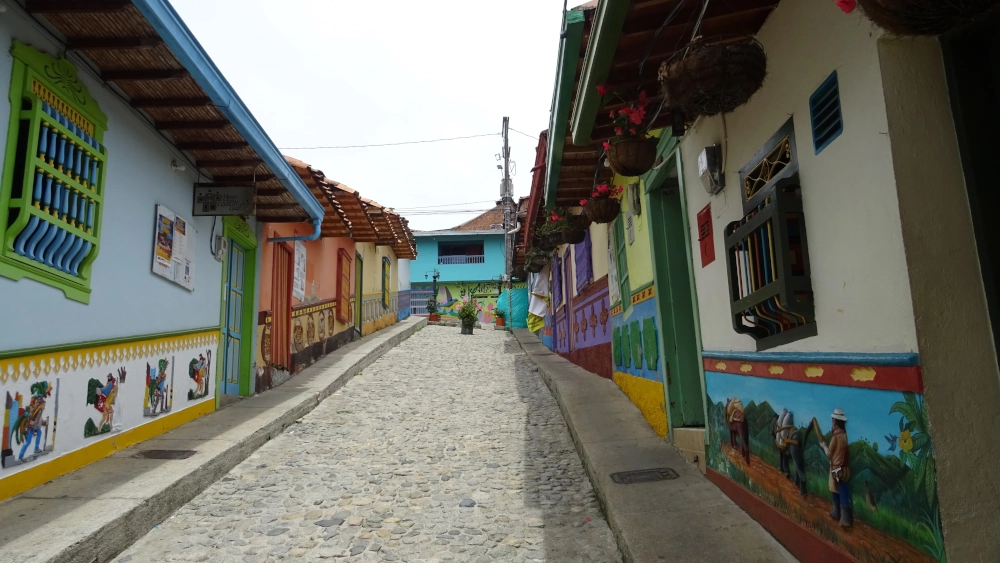
Street in Guatapé
The Plazoleta del Zòcalo is one of many places to relax, between the seafront (el Malecon), Calle del Comercio and Calle del Recuerdo.
Sailing down the Guatapè River, you’ll spot some of Pablo Escobar’s old residences.

Piedra del Peñol from a motorboat, Guatapé
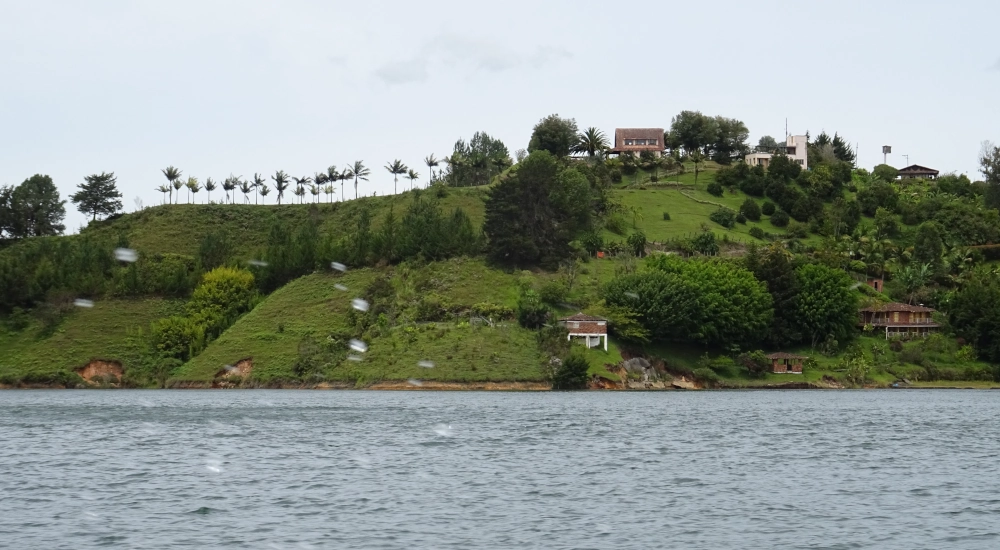
Motorboat tours in Guatapé

Pablo Escobar’s old villa in Guatapé
The Eje Cafetero is an essential area to visit on a trip to Colombia.
Pereira Airport is the main gateway to the region, and I recommend basing yourself in the small, quiet town of Salento.
Strolling through the colourful cobbled streets, surrounded by mountains, green hills and fresh, clean air, is a very pleasant and relaxing experience.
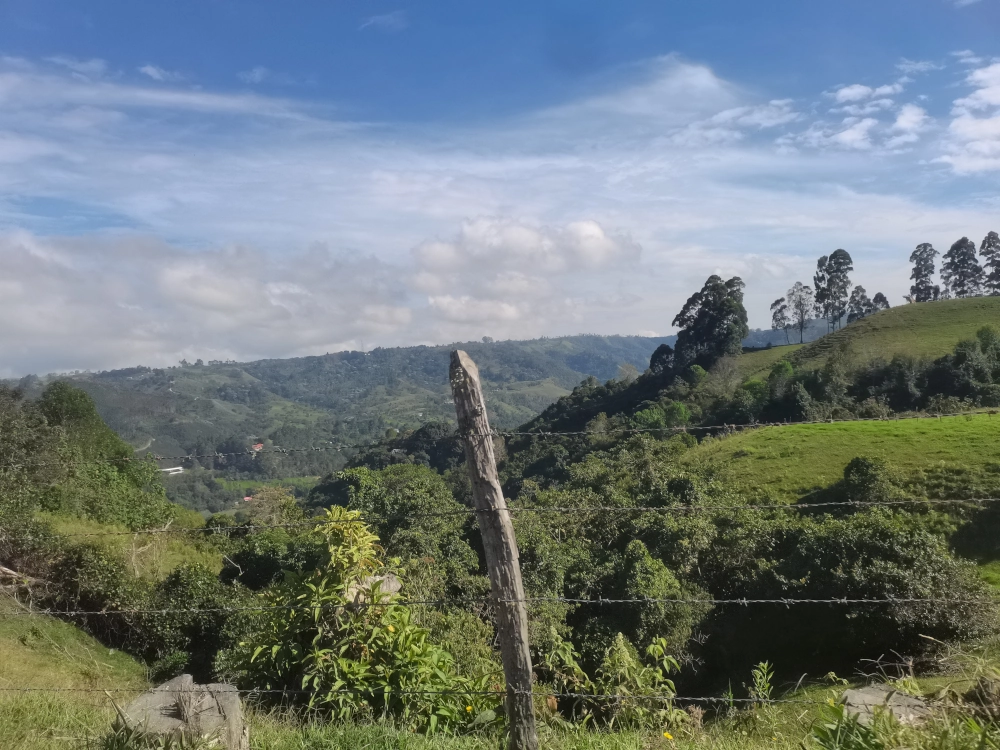
Eje Cafetero Colombia
The iconic Willy jeep, a semi-open vehicle that can carry eight to ten people, is the main means of transport.
Simply go to Plaza Bolívar, tell the driver your destination and board the first Willy that leaves.
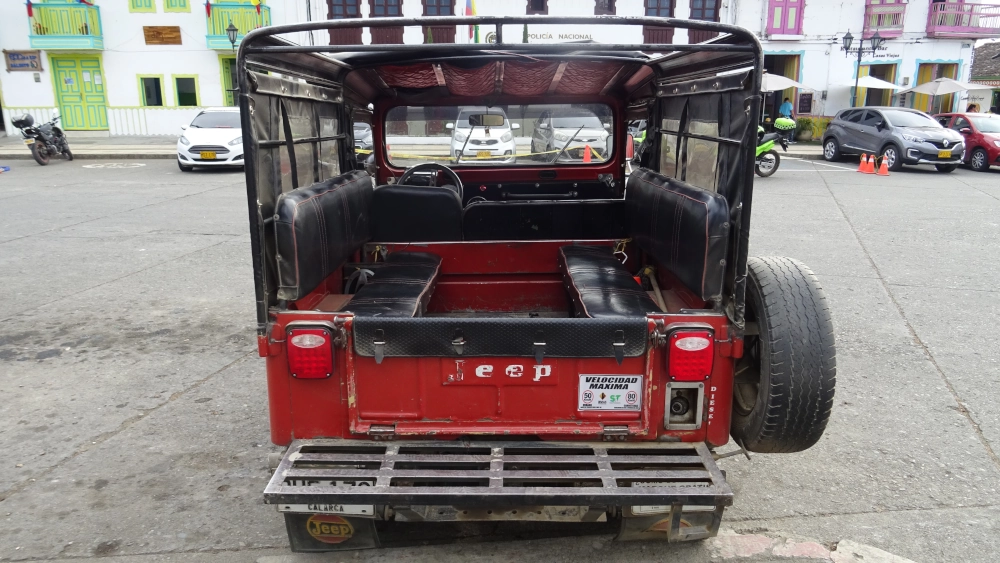
Jeep Willy, Eje Cafetero
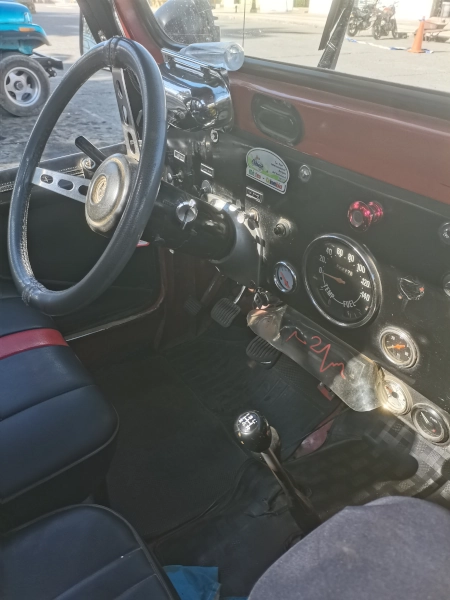
Inside a Jeep Willy, Eje Cafetero
As the name ‘Eje Cafetero’ suggests, you can spend your days in Salento discovering the surrounding farms, ‘las fincas’, and touring the various coffee and cacao plantations.
I chose to go to the ‘Finca cafetera tradicional El Recuerdo’ based on how long the experience would take and what time I was leaving.
For 30,000 pesos, I got to visit the plantations and find out about the characteristics, uses, exportation, etc. of coffee, cocoa, sugar cane and palm trees. And yes, even the coca plant.
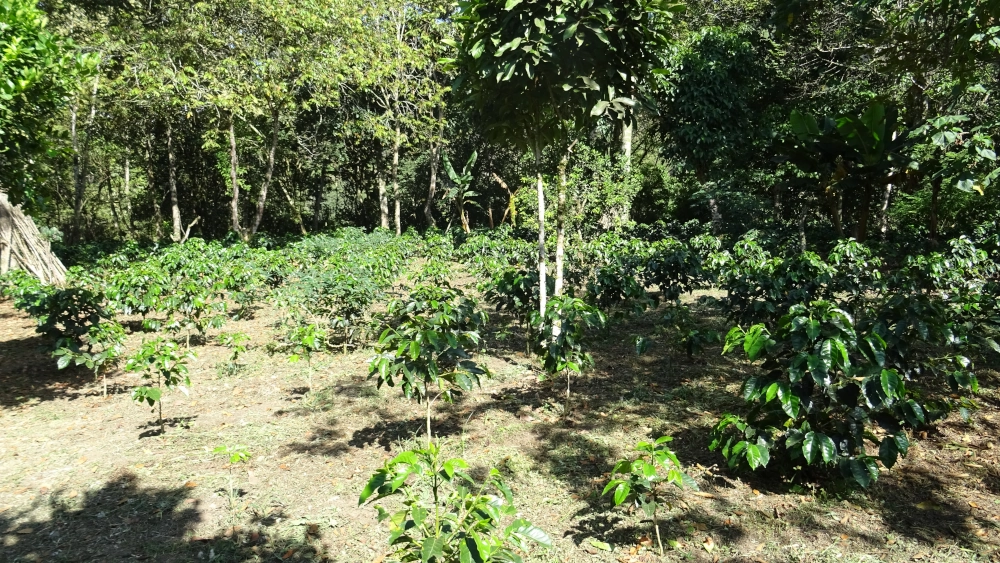
Coffee plantation
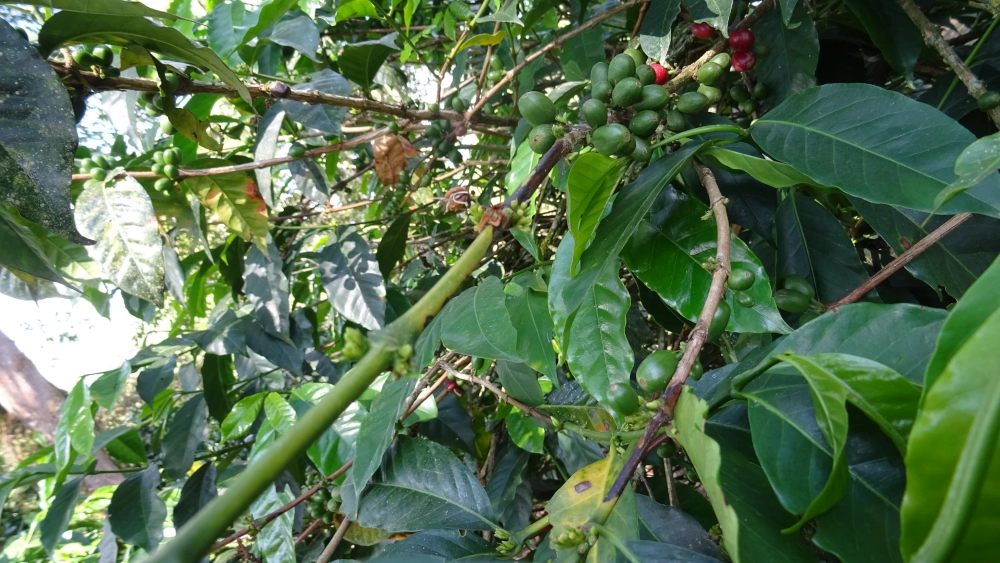
Coffee plant
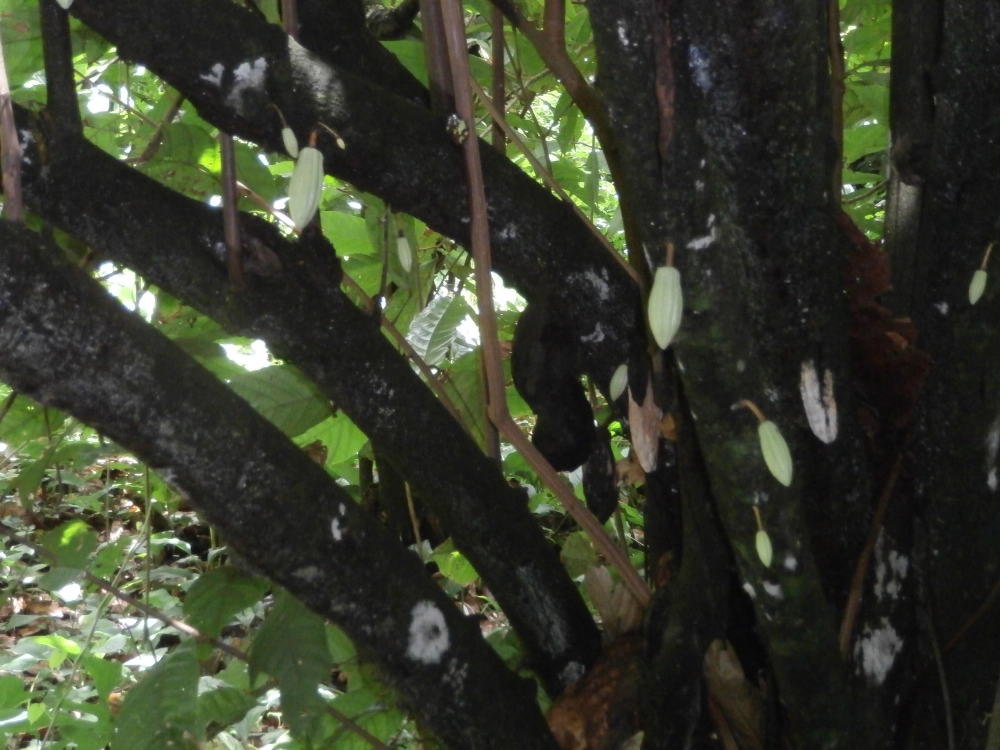
Cocoa plant
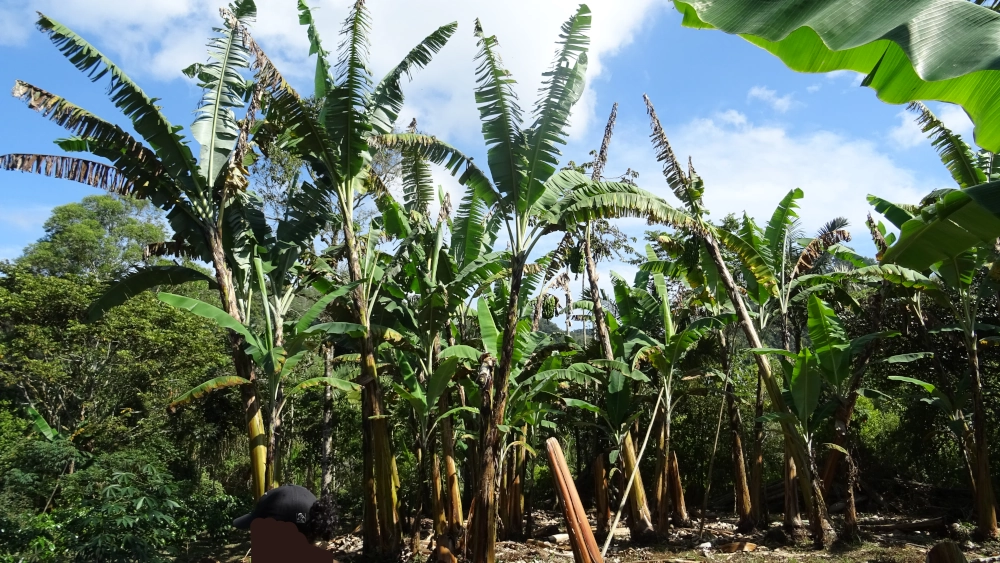
Banana plant
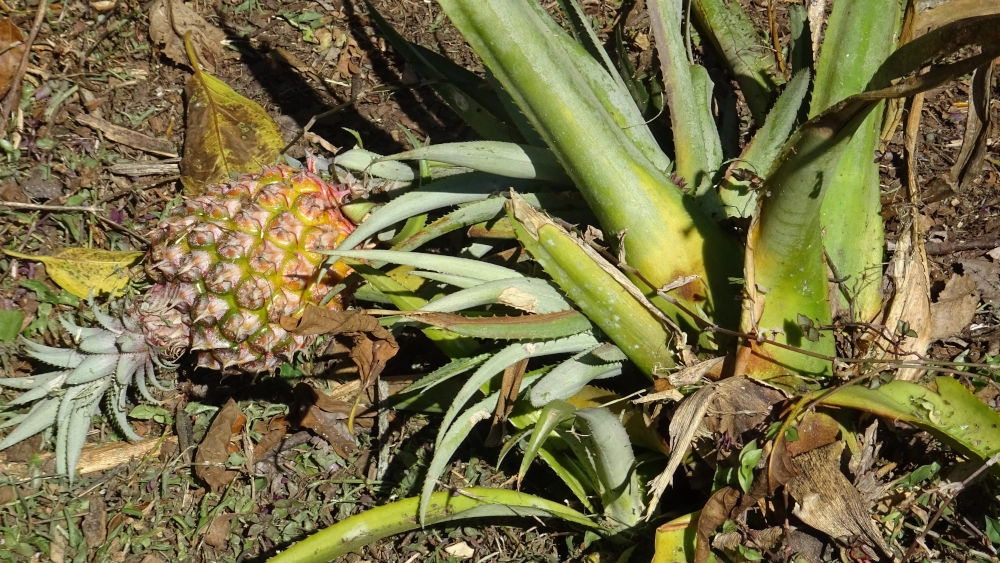
Pineapple plant
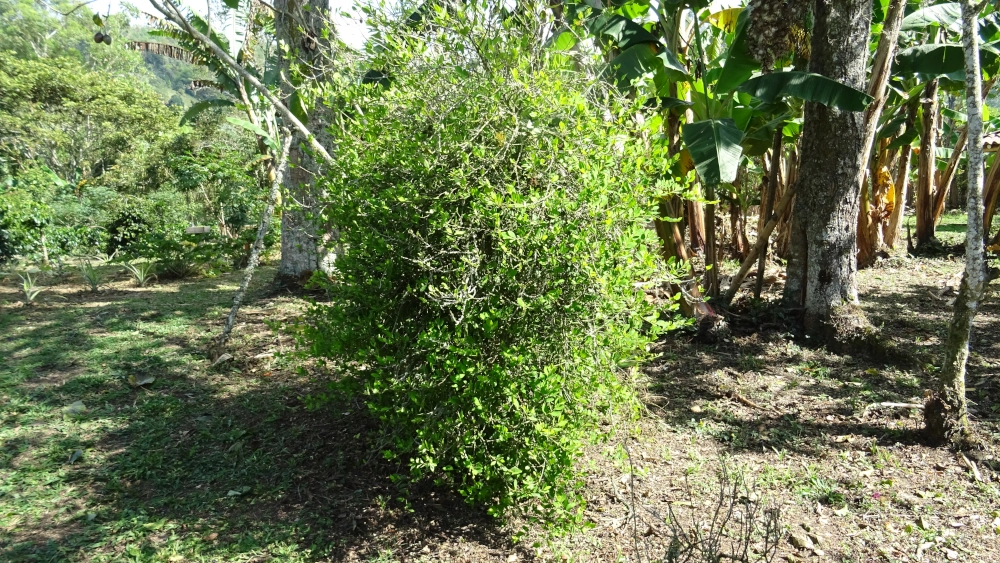
Coca plant
Colombia’s got some great photos, like the ones of the palm trees in the Valle del Cocora.
This is likely the main reason people travel here.

Landscapes of the Coffee Region

Animals grazing in the Cocora Valley
If you go straight ahead, you’ll reach the main point, where you can see the landscapes with the towering palm trees.
Or you can take the smaller road on the right and follow the path through the forest, suspension bridges over the river, woods and mud, until you reach the Cocora Valley.

Forest in the Coffee Region, Colombia
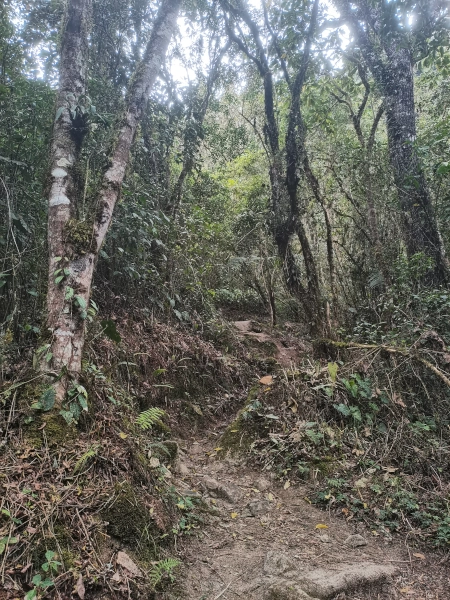
Trekking in Cerro Morrogacho

Suspension bridge on the trek through the Cocora Valley

Hiking boots are essential for the Cocora Valley.
When I get somewhere, I always go for the longest and hardest route, even if it means spending most of the trekking swearing and kicking myself for making that choice.
The trail was poorly marked, and the only signs that made me feel like I wasn’t lost were the ones warning me about the potential presence of Andean bears, pumas and dangerous trees.
However, the effort is rewarded, because after four hours of trekking, you reach the beautiful Cocora Valley.

Valle de Cocora sign

Woman from the pre-Columbian indigenous Quimbaya people with a parrot
Andean condors fly over the towering palm trees, which look like they’re trying to reach the low clouds, while sheep and mazama deer graze constantly.
It’s a stunning landscape, one you wouldn’t find anywhere else in the world.

Andean condors fly in the Cocora Valley

Wax palms among the clouds in the Cocora Valley

Colombia’s national tree can reach heights of up to 70 metres.
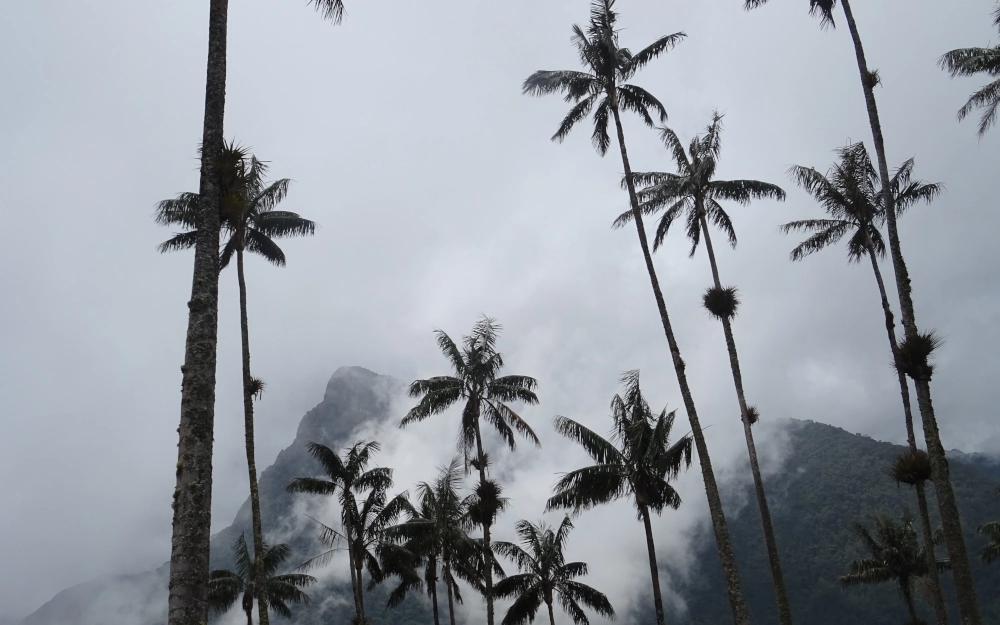
Palms and clouds

Cocora Valley, Colombia

Cocora Valley, Colombia
Cartagena is probably Colombia’s most touristy city.
Far from the bad reputation of Bogotá and the fear that Medellín instils, here I saw many travellers and there was an “Erasmus atmosphere” in the air.
That’s why, even though I liked the fortified city and the Barrio Getsemani, Cartagena didn’t quite win my heart.

Cartagena de Indias

Barrio Getsemaní, Cartagena de Indias
The city’s architectural symbol is the Torre del Reloj, the ancient gateway to the fortified city.
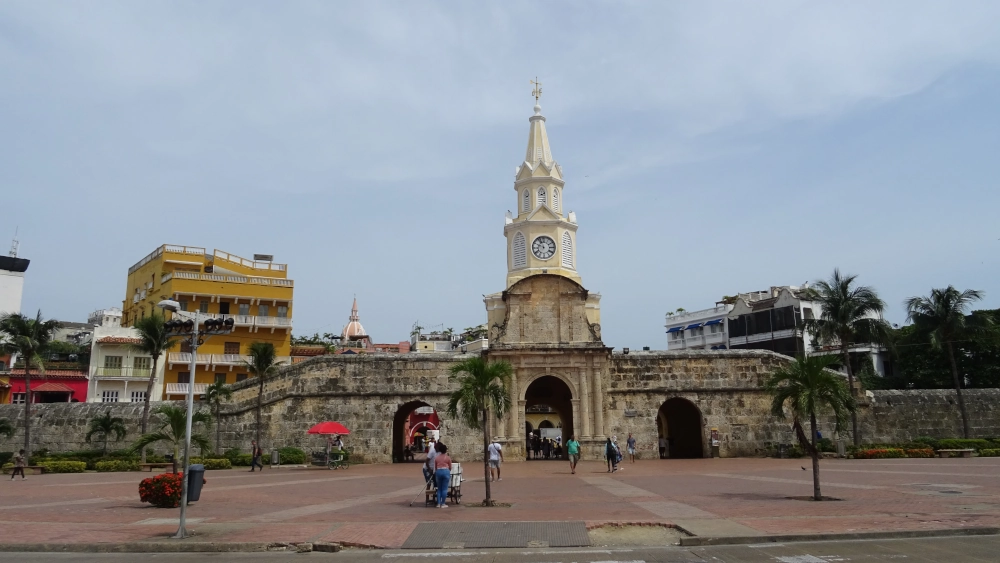
Torre del Reloj, Cartagena de Indias
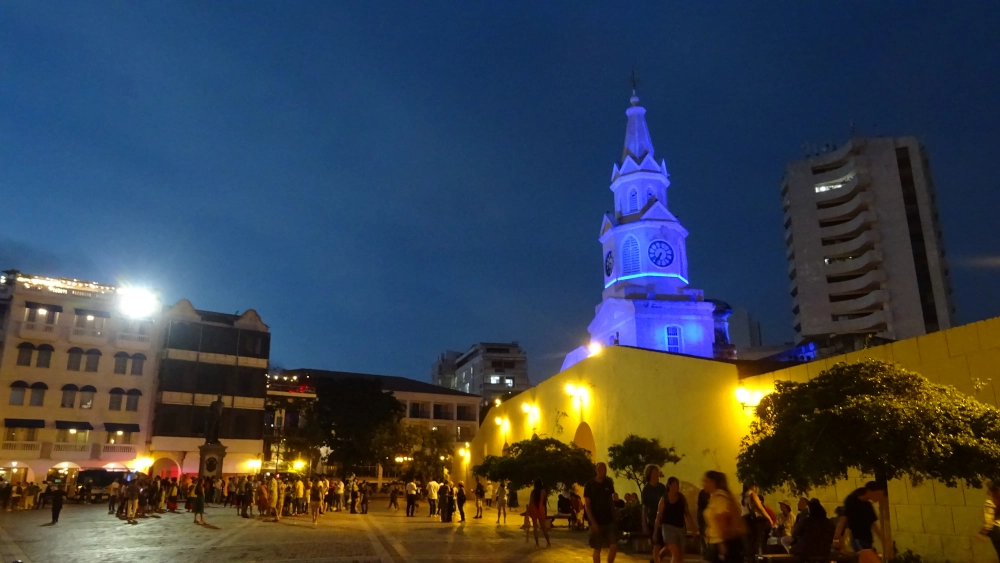
Torre del Reloj at night, Cartagena de Indias
The city’s port has always been really important to Colombia and, as with all seaside cities, there are loads of great panoramic viewpoints, especially from the historic walls.
The walls surrounding the city, which you can walk on, reminded me of the city of Derry in Ireland.

San Pedro Claver Shrine in the historic centre of Cartagena de Indias

Caribbean Naval Museum in Cartagena de Indias

The flag of Colombia flies over Cartagena de Indias
The Castle of San Felipe de Barajas is a military fortress built in the 17th century to protect the treasures that arrived in Cartagena from all the Spanish colonies from pirates and privateers before setting sail for Europe.
So, the castle has ramps, steps, stairways, tunnels and large open spaces.
This defensive strategy, together with its position on high ground, made it impregnable.

Statue of Blas de Lezo (with amputated leg and arm), Cartagena de Indias

Cartagena de Indias from its fortified walls

Cannon in the walled city of Cartagena de Indias

Inside the tunnels of San Felipe de Barajas Castle, Cartagena de Indias
When I think about Cartagena, I always remember Parque Centenario.
I found it by chance one morning when I was looking for some shade because the sun was shining in a blue sky.
Then, out of the blue, I saw some monkeys jumping around in the trees.

Grey titi monkey, an endangered primate endemic to Colombia, at Parque Centenario, Cartagena de Indias

Tamarino Oedipus at Centenario Park, Cartagena de Indias
I got a real kick out of trying to figure out what the other park visitors were looking at among the treetops.
That’s how in Cartagena’s Parque Centenario I saw my first sloths.
I watched them for a while, enjoying their slow but smooth and easy-going moves.
I saw sloths again in Costa Rica later on, but as always, you never forget your first time.

Three-toed sloths at Centenario Park, Cartagena de Indias

Three-toed sloths in the trees of Parque Centenario, Cartagena de Indias

Zooming sloth to Centenario Park, Cartagena de Indias
When you’re travelling in a big city, I always suggest picking your hotel or hostel based on what you’ve got planned each day.
If you have to leave the city early in the morning, when the traffic can be pretty bad and stressful, it’s worth thinking about sleeping right near the airport (or, like me, right inside it).
For a city visit, I’d say stay in the centre.
Choose places that are close to Plaza Bolivar, the Gold Museum, the Colon Theatre and the La Candelaria neighbourhood.

La Candelaria Bogotà

Avenida Jiménez, historic centre of Bogotá
Back in 2024, due to a flight delay, Avianca gave me a voucher for the Hilton Hotel in Bogotá.
As you’d expect, the reception, room and restaurant were all 5-star.
Here’s a funny little anecdote: with the Avianca voucher, dinner was plentiful but a fixed menu.
It was funny being looked at like I was some rich VIP just because the waiters served me even though I hadn’t ordered anything…

Rainbow in La Candelaria, Bogotá
It was quite tricky to choose the best area to stay in because there wasn’t much info about the city.
I decided to go to Yolo Hostel Medellin after getting some recommendations.
The hostel is in El Poblado, a part of Medellin that’s not dangerous but always busy.
The metro is really handy for getting around.
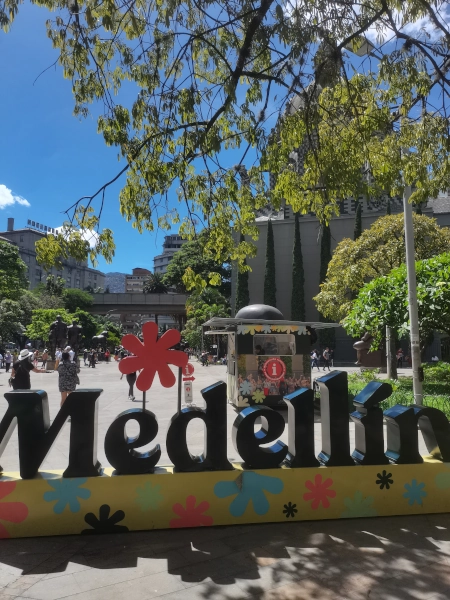
Medellin inscription

Cisneros Square – Park of Lights (Parque de las Luces), Medellín

The Medellín River flows through the city in the Parques del Río
Cartagena seemed to me to be the most touristy city in Colombia.
This means there are loads of groups of young people (especially from the US) who are only interested in alcohol and non-stop fun, without restraint and, above all, without respect.
Basically, it’s not like how I usually travel.
I chose to stay at the Seven Nights Hostel because it was cheap and in a good part of town, but the other guests there made it hard to get a good night’s sleep.
To be honest, I think this is just a standard feature of all hostels in Cartagena.

Parque de la Marina, Cartagena de Indias

Sunset over Cartagena de Indias
My main priority was a trip to the Cocora Valley, so I chose Salento as the base for my stay in this part of Colombia.
I chose Kilómetro Cero Hostel because of the price, but there are loads of similar places to stay.
I’d definitely recommend this hostel because the owner is really helpful, the area is super peaceful and it’s really close to Plaza Bolivar, where there are loads of bars and restaurants. You can also get transport from there to the Cocora Valley.
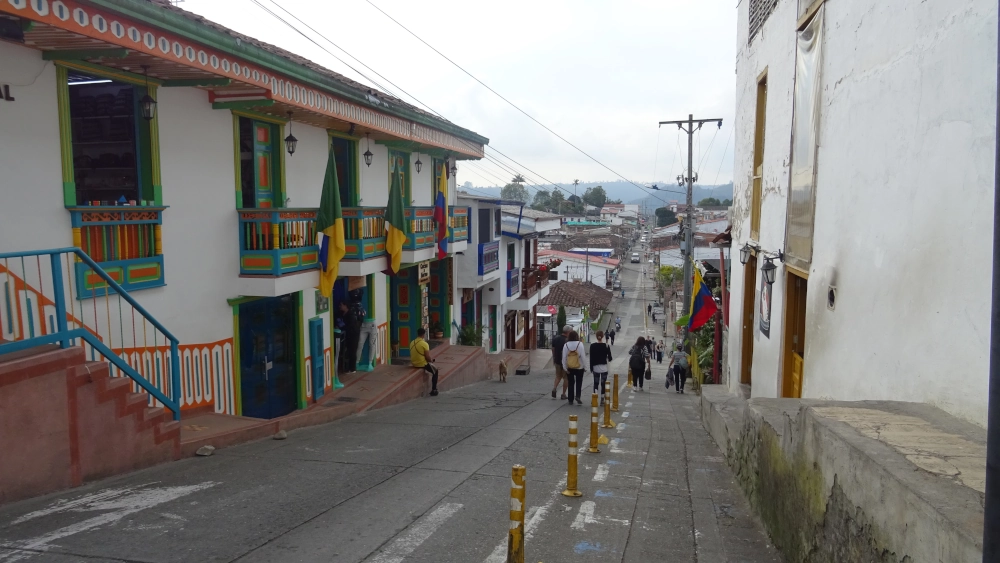
Street in the historic centre of Salento
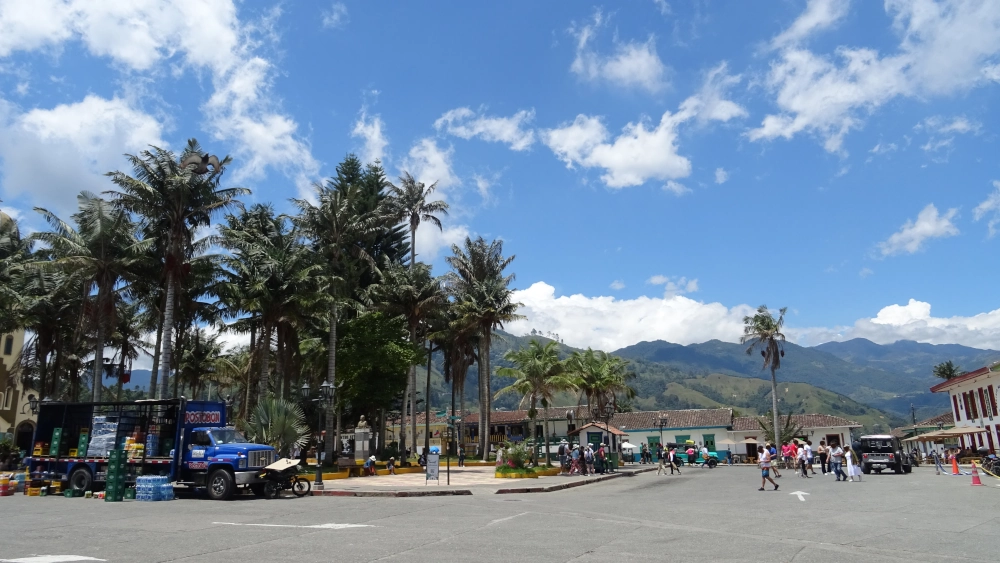
Plaza Simon Bolivar, Salento
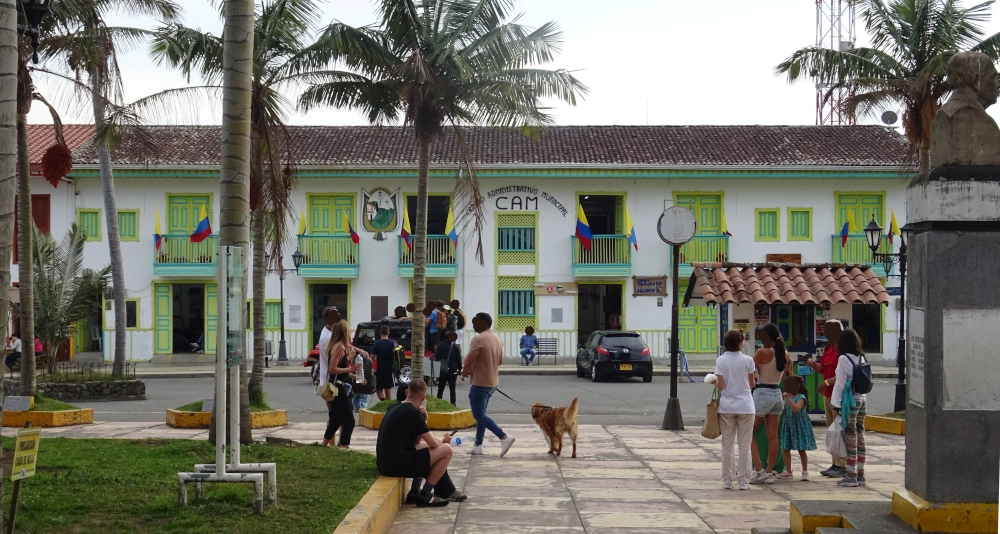
Guildhall of Salento
Colombia’s got a reputation for being dangerous, which means it’s still authentic and hasn’t been ruined by mass tourism, at least not for European and Asian tourists anyway.
Visiting Colombia is pretty easy and safe.
Obviously, you need to follow normal personal safety precautions, and I recommend having at least some experience travelling in Latin America.
Try not to walk around with valuable items in plain sight, like jewellery, expensive phones or cameras.
If you’ve got no choice but to walk around with a backpack, just stick to carrying the essentials.
Just a heads-up: carrying your backpack in front of you instead of on your back can make you more noticeable to thieves.
Keep your eyes peeled and be aware of your surroundings.
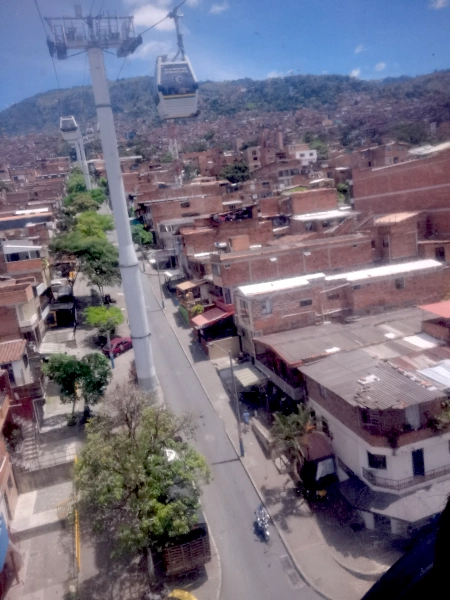
Metrocable Medellin
For me, travelling also means supporting local communities.
That’s why, whenever I can, I steer clear of big international associations.
For the few but important tours, I avoided Civitatis and Get Your Guide (which are virtually non-existent in Colombia anyway), and I successfully used Beyond Colombia.
Finally, I just wanted to mention the last bit of info, which is about saying goodbye to Colombia, i.e. the moment of leaving the country by plane.
After you’ve passed through the boarding gate, you don’t get on the plane.
All passengers are stopped in groups in a room: men on one side, women on the other, with hand luggage in the middle.
That’s where drug-sniffing dogs come in.
First, the dogs sniff the luggage a few times, then, once everyone’s turned to face the wall, they sniff all the passengers for a bit.
If everything’s fine, you can pick up your luggage and get on the plane.

Checks before boarding the Bogota – Madrid flight

Pre-departure check at Bogota Airport

Drug detection dogs at Bogotá Airport
A la orden, Colombia!

 Egypt
Egypt